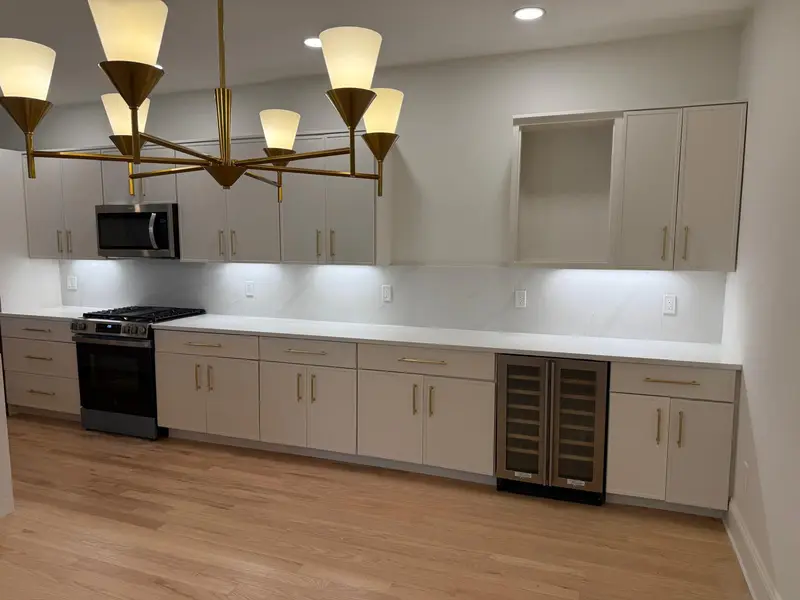
Cabinet painting, Dover MARefinishing Dover kitchen cabinets: what the house's era tells you
Repainting cabinets makes sense when the boxes are solid and the layout works. Replacement makes sense when the boxes are swollen, sagging or in the wrong places. Everything in between is a judgment call worth making with the doors open and the drawers pulled.
The Town Assessor's year-built counts, published in the 2021 Housing Production Plan, give a picture of the kitchens out there. Of 1,837 single-family homes, 460 date from the 1960s, while 315 were built between 1990 and 2009 and another 160 from 2010 to 2020. A kitchen may have been remodeled since the house was built, so the cabinets are dated by inspecting them, not by the deed.
Cabinets by era and material
Newer cabinets present one trap: they can leave the factory with a catalyzed or conversion-varnish finish that is very hard and slick. Ordinary primer won't hold on it. Scuff-sanding and a primer rated for difficult surfaces are needed, and a tape adhesion test on a door back confirms the bond before the whole kitchen is coated.
- Original cabinets in a mid-century house, where they survive: check for solid wood face frames and doors, which are good candidates if joints are tight
- Oak cabinets from later remodels: open grain that telegraphs through paint unless it is filled
- Maple, cherry or MDF doors: smooth surfaces that paint well with the right primer
- Thermofoil or laminate skins: poor paint adhesion; peeling skins usually point to replacing doors
Bigger houses, more cabinet runs
Assessor data put the average single-family house at 4,363 square feet, and homes from 2000–2009 average 7,356. A larger house can mean cabinetry well beyond the kitchen: a pantry, a mudroom bank, laundry cabinets, bathroom vanities, a bar or library built-ins. Painting them all at once keeps colors and sheen consistent; doing them in phases is fine as long as the same product and color formula are recorded for later.
Painted built-ins in older homes
About 61.1% of housing units here were built before 1980, and 204 units date from 1939 or earlier, according to the Census. Cabinets that have been painted before, and especially original cupboards and pantry built-ins in early houses, may have lead in the lower layers. Sanding them without controls would spread that dust through the kitchen. Testing first, and following lead-safe practices if it is present, is the starting point; our lead-safe painting page explains the requirements.
What the process looks like
Doors, drawer fronts and hardware come off and are labeled. Every surface is degreased, because years of cooking residue will defeat any primer. After scuff-sanding and priming, doors can be sprayed for a smooth finish, while boxes and face frames are sprayed in a masked kitchen or brushed and rolled. The cabinet painting process article goes step by step, and cabinet painting vs. replacement helps with the bigger decision.
Cabinet enamels can feel dry within hours but take weeks to reach full hardness, so doors need gentle use and mild cleaners for a while after rehanging. AJ Painting Services is licensed and insured and provides a free in-home visit and written estimate listing every door, drawer and panel.
Dover at a glance