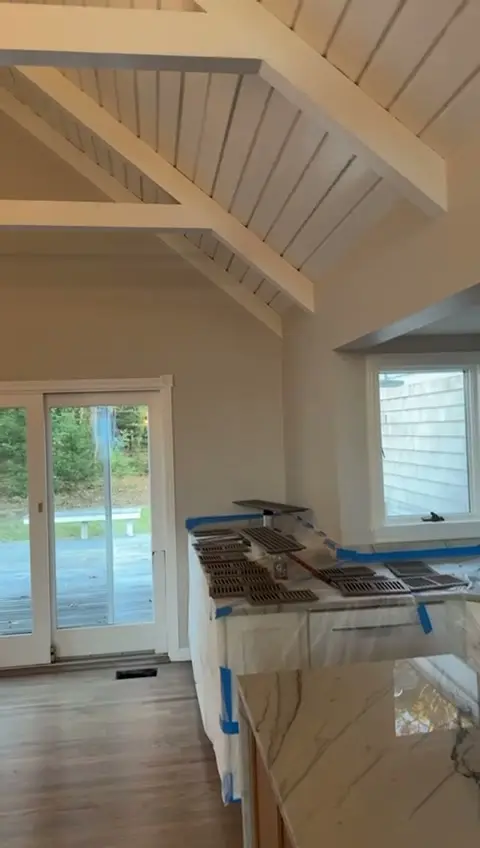
Interior painting, AuburnPainting the inside of an Auburn house built in the middle of the last century
As a group, Auburn's homes are middle-aged. Census estimates for 2020–2024 put the town's median construction year at 1963, and the 1950s added more of today's housing than any other decade: 1,454 units, roughly one in five. A room in a house that age may hold several layers of paint, each applied with whatever product was popular at the time.
That history matters more than the color you pick. A new coat bonds only to what sits directly beneath it, so a durable interior job starts by finding out what that is.
Plaster or drywall: read the wall first
Plaster and gypsum board fail in different ways. Plaster tends to crack in long lines that follow the lath, spread diagonally from door and window corners, or bulge where the keys behind it have let go. Drywall shows nail pops, cracked tape at seams, and dents. A house finished in the late 1940s or the 1950s could have either one, or both after a renovation, so tapping and looking closely at a few walls comes before any quote.
Plaster cracks need to be opened up, taped and filled so they do not telegraph through the new paint within a season. Loose plaster may need to be reattached with washers before it is patched. Drywall seams that have split are re-taped.
Lead in older layers
Roughly 70% of the town's housing units were built before 1980, according to the same Census table (its decade bucket runs through 1979, so the share built before the 1978 lead-paint ban is a little lower). In any of those houses, the bottom coats on trim, windows and doors may contain lead.
Intact lead paint under newer coats is not the hazard; dust is. Sanding window sashes, scraping stair stringers or cutting into old door casings can release it. Federal rules from the EPA's Renovation, Repair and Painting program require certified, lead-safe work practices when that kind of work disturbs paint in pre-1978 homes. Our lead-safe painting page describes containment, cleanup and how to test before work starts.
Trim, doors and the oil-to-latex problem
For decades, interior trim and doors were finished in oil-based enamel. Rolling a modern water-based paint straight over it can lead to peeling: the new coat may scratch off with a fingernail weeks later. A quick test tells you what you have. Rub a spot with a cotton ball and rubbing alcohol; if paint comes off on the cotton, it is latex, and if nothing transfers, treat it as oil.
Oil-painted trim gets cleaned, scuff-sanded and spot-primed with a bonding primer before the topcoat. In a house where earlier owners mixed products room by room, that check is repeated rather than assumed.
Ceilings, sheen and the newest houses
Ceilings are where flat paint earns its keep, because it hides the roller marks and small dips that raking light from windows exposes. Walls in kitchens, baths and hallways hold up better in eggshell or satin, which can be wiped down. Trim and doors usually go semi-gloss so they can be cleaned.
At the other end of the age range, about 8.8% of Auburn's units date from 2000 or later. Walls in those houses may still carry their first coat, often a flat finish that marks easily. Those rooms usually need less repair and more attention to cleaning, spot-priming patches and choosing a more washable sheen. The town's 2019 master plan places many of its oldest houses, dating from 1729 to 1899, along Central and Church Streets; our downtown Auburn page covers painting in the center of town.
Auburn at a glance
| Median year housing was built | 1963 (±4 years) (U.S. Census ACS 2020–2024 5-year, table B25035) |
| Largest construction decade | 1950s: 1,454 units, 20.7% of the housing stock (U.S. Census ACS 2020–2024 5-year, table B25034) |
| Housing units built before 1980 | 70.0% (4,920 of 7,029) (U.S. Census ACS 2020–2024 5-year, table B25034) |
| Housing units built 2000 or later | 8.8% (620 units) (U.S. Census ACS 2020–2024 5-year, table B25034) |
| Oldest houses in town | Many date from 1729–1899, along Central and Church Streets (Auburn 2019 Master Plan, Natural, Cultural & Historic Resources chapter) |