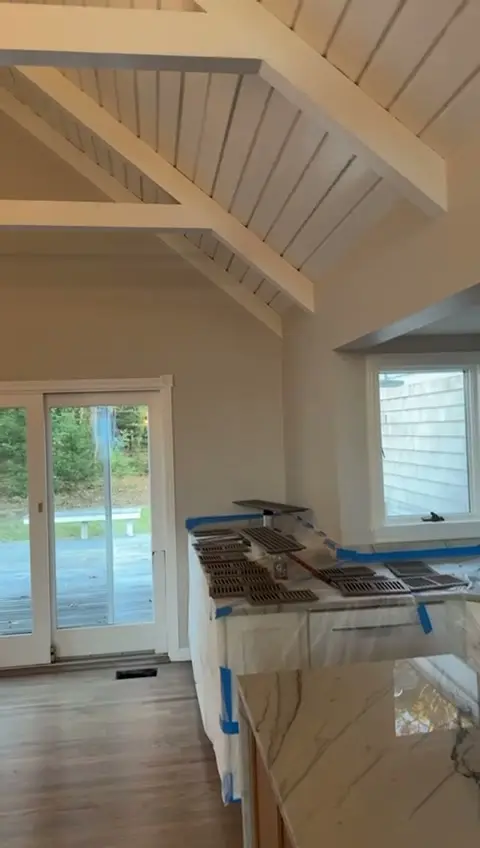
Interior painting, Acton MARepainting the inside of an Acton house built in the 1960s, 70s or earlier
Census figures put the median year built for local housing at 1974, and the 1960s and 1970s are the two largest decade brackets in the table, together accounting for 3,605 of 9,575 units, or 37.7%. That matches the town's growth record: the population went from 3,510 in 1950 to 14,770 in 1970, more than doubling in each of those two decades. For an interior job, that history tells you a lot about what is under the paint before anyone opens a can.
Walls from that period may be gypsum drywall or plaster, so the surface is worth confirming room by room, and a room repainted over fifty-plus years may carry several layers of different products. Common drywall problems include nail pops along ceiling joists, tape seams that show through the finish, glossy trim that new paint will not grip, and patches where primer was skipped.
Drywall from the boom years versus older plaster
Only 8.8% of housing units here were built in 1939 or earlier, and interiors from that period may still have original plaster on wood lath. Plaster behaves differently from drywall. Hairline cracks open and close with the seasons, loose keys show up as bulges, and old calcimine or oil layers can make new latex paint peel in sheets. Repairs there call for setting-type compounds or plaster patching rather than lightweight spackle, followed by a bonding primer.
For drywall rooms, the prep list is shorter but still matters: reset popped fasteners, re-tape any failed seams, skim visibly rough patches, and spot-prime every repair so the finish coat dries to an even sheen. Ceilings catch raking light from windows, so a flat ceiling paint does the most to hide small surface variation.
Lead paint in rooms built before 1980
The Census reports that 60.7% of housing units in town were built before 1980. That is the nearest bracket to the federal 1978 cutoff the agency publishes, so it overstates the exact pre-1978 share somewhat, but it means a majority of local homes need the question asked. Under the EPA's Renovation, Repair and Painting Rule, paid work in pre-1978 housing that disturbs more than six square feet of painted surface per room must follow lead-safe practices.
Interior painting reaches that threshold quickly: sanding a run of window sills, scraping a door and its casing, or opening a wall for repair. Lead-safe work means plastic containment, misting instead of dry sanding, HEPA vacuuming and a cleaning check before the room is handed back. Our lead-safe painting page explains those procedures in more detail.
Choosing finishes room by room
If the existing trim is oil-based, a water-based enamel applied straight over it will scratch off with a fingernail. A quick alcohol rub test tells you which type is on the woodwork. The interior paint finish comparison goes through the sheen choices in more detail.
- Ceilings: flat white or a tinted flat to hide minor surface variation
- Living areas and bedrooms: matte or eggshell, which touches up more easily than glossier sheens
- Kitchens, baths and mudrooms: satin or a scrubbable matte rated for moisture
- Trim, doors and stair rails: semi-gloss or satin enamel over a primer that bonds to old oil paint
Planning the work around a lived-in house
Interior painting can be done in any month, which makes it a good winter project when exterior work is off the table; painting indoors during a Massachusetts winter covers ventilation and drying times in cold weather. Clearing furniture to the middle of each room, taking down wall hangings and setting aside fragile items ahead of time shortens the schedule. If the kitchen cabinets are part of the plan, the cabinet painting page explains how that work is sequenced separately from the walls.
Acton at a glance
| Median year housing was built | 1974 (U.S. Census ACS 2020–2024 5-year, table B25035) |
| Units built 1960–1979 | 37.7% (1960s: 18.4%; 1970s: 19.3%) (U.S. Census ACS 2020–2024 5-year, table B25034) |
| Units built before 1980 | 60.7% (5,810 of 9,575) (U.S. Census ACS 2020–2024 5-year, table B25034) |
| Units built 1939 or earlier | 8.8% (841 units) (U.S. Census ACS 2020–2024 5-year, table B25034) |
| Population growth, 1950–1970 | 3,510 to 14,770 (+106% in the 1950s, +104% in the 1960s) (The Acton Exchange, citing U.S. Census figures) |
| Interior lead-safe threshold | More than 6 sq ft of paint disturbed per room, pre-1978 housing (U.S. EPA, Renovation, Repair and Painting Program) |