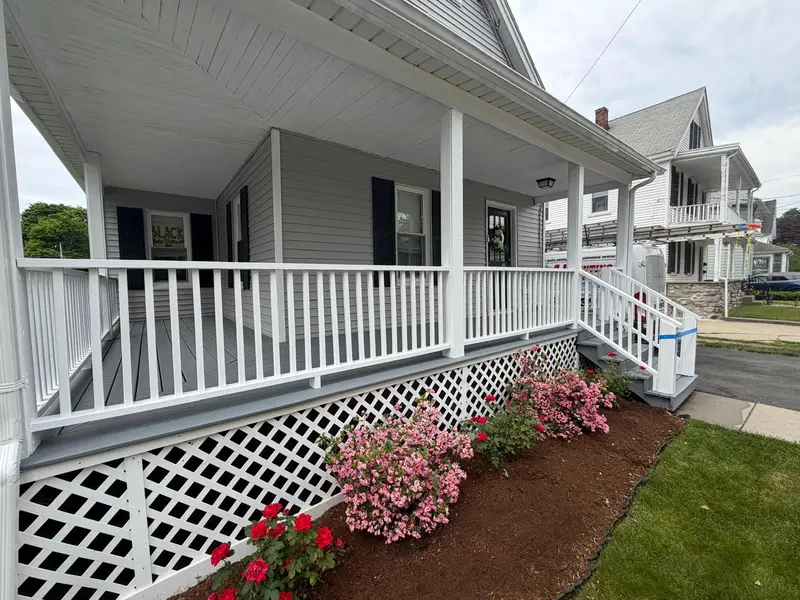
Deck staining, Acton MAKeeping an Acton deck or porch sealed against sun, snow and standing water
A deck coating takes more abuse than any wall paint. Horizontal boards hold snow for weeks, collect water in every gap and take full sun on their top face, and the wear from foot traffic concentrates on stairs and the path to the door. That is why decks need recoating more often than siding, and why the choice between stain and paint affects every later recoat.
Single-family detached houses make up 63.3% of housing units in town, and on a detached house there is usually no neighboring unit sharing the deck. Attached single-family units are another 8.3%, and in those the deck or railing line may adjoin a neighbor's or fall under association rules on color and materials.
Matching the coating to the wood
Penetrating stains soak in and wear away gradually, so recoating is mostly cleaning and a fresh coat. Solid stains and porch paints form a film that blocks more UV but eventually peels, and peeling film has to be scraped before the next coat. The paint vs. stain comparison goes further into the trade-off.
- Pressure-treated pine: needs to dry before its first coat; a water-drop test shows whether it absorbs or beads
- Cedar and redwood: take penetrating oil and semi-transparent stains well; tannins can bleed through light solid colors without a stain-blocking primer
- Composite boards: generally not stained; cleaning is the main maintenance unless the manufacturer approves a coating
- Previously painted or solid-stained wood: can only take another film coating unless it is stripped back to bare wood
Porches on the older houses
Covered porches with tongue-and-groove floors and turned railings are a different job from an open deck. They tend to be painted rather than stained, and the old layers can be thick. With 60.7% of local housing built before 1980, an original porch floor may have lead-based paint underneath. Once paid work disturbs more than 20 square feet of that paint outdoors, EPA lead-safe rules apply; the lead-safe painting page explains the containment and cleanup involved.
In the West Acton, Acton Center and South Acton historic districts, porch changes visible from the street typically need a Certificate of Appropriateness, while repainting a porch the same color, or a new color, generally does not. Replacing rotted balusters with matching ones is the kind of in-kind repair that can go through the faster Certificate of Non-Applicability.
Getting the prep right
A new deck coating can fail because of what it was put over: gray, loose surface fibers, mildew, or an old coating that was never removed. A proper sequence is wash with a deck cleaner, rinse, apply a brightener to restore the wood's pH after cleaning, sand raised fibers and furred areas, and let the boards dry fully. Loose fasteners get reset and soft boards, especially at the ledger, stair treads and post bases, get replaced before anything goes on.
Stain needs dry wood and a forecast free of rain through the cure time, so the workable season runs roughly from late spring into early fall. Applying in the cooler part of the day avoids the product flashing off in direct sun. How deck stain holds up through a New England winter is worth reading before choosing a product.
Doing the deck with the rest of the house
If the trim and siding are due as well, painting the house first and staining the deck last keeps drips and ladder marks off fresh boards. The exterior painting page covers the house side of that schedule.
Acton at a glance