
Norwood, MA
Porch Floor, Steps & Railings in Norwood, MA
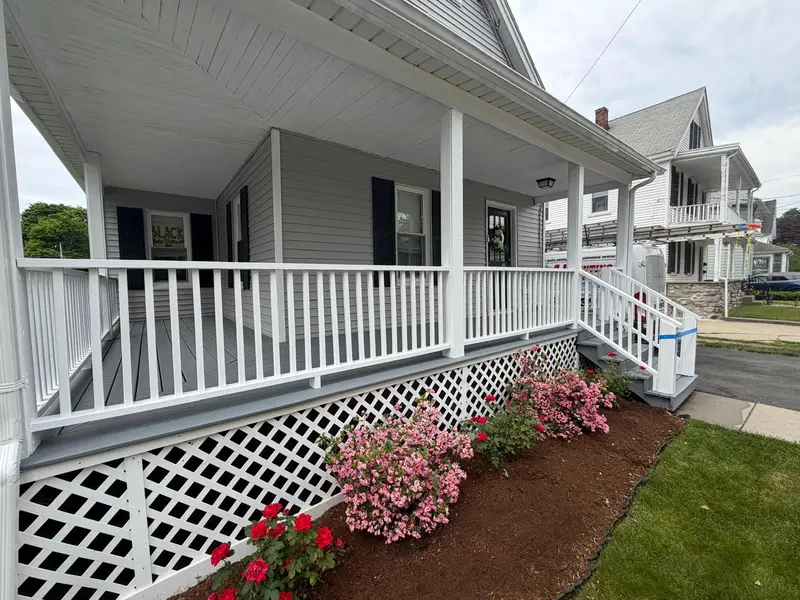
A Norwood home's front and back porches: floor boards and steps painted gray, with railings, balusters and lattice skirting in white.
See the photos →Decks, porches, railings and stairs cleaned, prepped and stained or painted at Randolph homes, with the product matched to the wood and the yard.
The census counts 8,233 single-family detached homes, 62.9% of all housing units, plus 1,272 attached units, and 71.3% of occupied homes are owner-occupied. The 2013 preservation plan describes the postwar subdivisions, mostly modest ranches and Capes, laid out on open land and former farms throughout town.
A deck added to a ranch decades after it was built, a newer deck on a 2010s house (the census counts 1,142 units from that decade), and a painted porch on an older home each start from different wood and different coatings. The first step is figuring out which you have.
The state's 1979 survey describes Randolph as rocky, glacially shaped uplands with several wetland areas, two large ponds and numerous bogs and swamps. If your lot borders a wet area or slopes toward the deck, the boards and framing near the ground can stay damp long after rain. Shade from trees has a similar effect.
Damp, shaded decks grow mildew and algae, and stain applied over either will fail early. Cleaning with a deck cleaner, rinsing, and letting the wood dry for a few days comes before any coating. Clearing leaves out of the gaps between boards and keeping soil and mulch from touching the lowest boards also help the wood dry between storms.
Penetrating stains soak into the wood instead of forming a film on top, so they wear away rather than peel. A transparent or semi-transparent stain shows the grain and is simpler to recoat later; a solid stain hides more and lasts longer on the vertical parts but can wear through on stair treads and walk paths. Paint and solid deck coatings give the most color coverage, but once a film starts to peel, the next round of prep involves more scraping.
Pressure-treated pine, cedar and composite all take finishes differently. New pressure-treated lumber may need weeks to dry out before it accepts stain, which a simple water-drop test can show: if water beads on the surface, wait. Cedar takes oil-based and waterborne stains well once mill glaze is removed. Composite usually needs only cleaning, unless you want to change its color with a coating made for it.
Of the 13,080 housing units counted in town, 9,099 were built before 1980. A porch floor, railing or set of stairs that has been painted for decades on a pre-1978 house may have lead in its lower layers, so scraping or sanding it falls under the EPA's lead-safe rule. That means ground covers, no dry power sanding without HEPA collection, and careful cleanup of chips from the yard. Our lead-safe painting page explains the process.
If the siding and trim are due as well, the exterior painting page for Randolph covers the rest of the house. Coatings need dry wood and temperatures above the label minimum overnight; our post on deck stain and New England winters covers the timing.
| Single-family detached homes | 62.9% of housing units (8,233 of 13,080) (U.S. Census ACS 2020–2024 5-year, table B25024) |
| Owner-occupied homes | 71.3% of occupied units (U.S. Census ACS 2020–2024 5-year, table B25003) |
| Terrain | Rocky glacial uplands with ponds, bogs and swamps (Massachusetts Historical Commission, Reconnaissance Survey Town Report: Randolph (1979)) |
| Postwar subdivisions | Built on open land and former farms throughout town (Randolph Historical Commission, Randolph Preservation Plan 2013) |
These jobs were in other towns, not in Randolph. Each card names the town where the work was done.
A Norwood home's front and back porches: floor boards and steps painted gray, with railings, balusters and lattice skirting in white.
See the photos →It can, if the deck is cleaned of mildew and allowed to dry fully before staining. A penetrating stain with a mildewcide is a better match for a shaded deck than a thick film, which can trap moisture and peel. Trimming branches and clearing debris from between the boards also helps.
When the wood is dry enough to absorb water. Sprinkle a few drops on a board: if they bead up, wait; if they soak in within a few minutes, it's ready. Depending on the lumber and the weather, that can take several weeks or more.
Only after the paint comes off, since stain can't soak through an existing film. That means stripping or sanding the boards to bare wood. A solid stain or a fresh coat of deck paint over well-prepped boards is the other option.
Yes. Porch floors, steps, railings and ceilings can be prepped and painted. If the house was built before 1978, scraping old paint is done with lead-safe containment and cleanup.
Size, the number of stairs and balusters, the condition of the current finish and whether stripping is needed all affect the total. Our deck staining cost guide walks through those factors for Massachusetts decks, and the free on-site visit ends with a written estimate.
AJ Painting is licensed and insured, with a 5.0 Google rating across 35 reviews. Call (508) 258-4325, Monday to Saturday, 7AM to 6PM.
5.0 on Google · 35 verified reviews · Licensed & insured · Written quote in 48h