
Location not listed
Dental Office Waiting Room
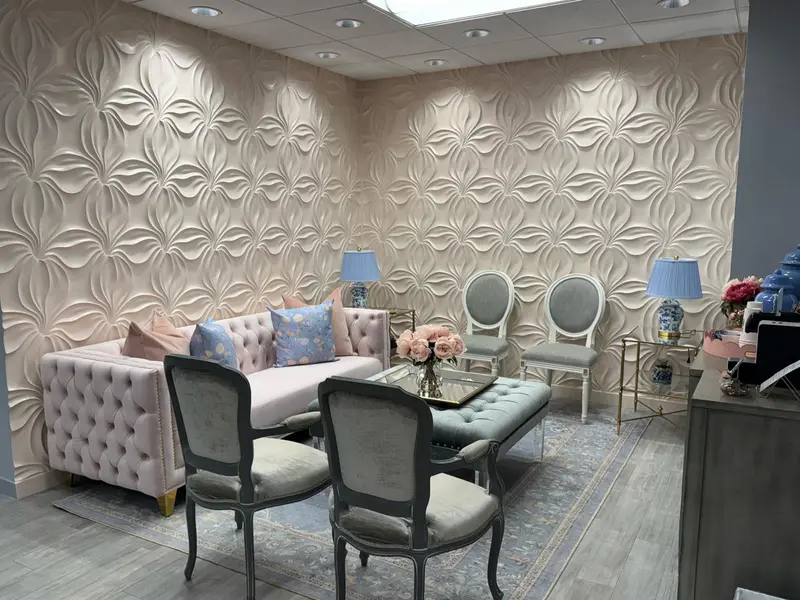
A dental practice's waiting room and reception area, finished in soft gray with applied panel molding, next to a sculpted floral feature wall.
See the photos →Painting for Taunton condo owners and associations: unit interiors, corridors, stairwells, entry doors and building exteriors, scheduled around the people who live there.
The Census does not count condominiums directly, but it does count buildings by size. Here, 16.0% of housing units sit in buildings with five or more units, from 1,799 units in five-to-nine-unit buildings to 674 units in complexes of 50 or more. Another 29.0% are in two- to four-unit buildings and 6.8% are single-family attached homes such as townhouses. The Census does not say how many of these are condos, rentals or owner-occupied multi-families.
That range shapes the job. A two-unit condo conversion may have no management company at all, just two owners splitting a hallway. A large complex will have a board, a property manager, and written rules about contractors, hours and parking.
Your master deed and bylaws spell out the boundary. In general, the walls, ceilings and trim inside your unit are yours to paint, while hallways, stairwells, lobbies, exterior siding and often the outside face of unit entry doors belong to the association. Read the documents before choosing a door color, because a hallway side that does not match may draw a violation notice.
For a unit owner, interior work goes much like painting any home: patching, priming where needed, and finish coats. The difference is logistics: elevator or stair access for materials, where a work van can park, and quiet hours in a shared building.
An association may require a certificate of insurance before any contractor works in the building, sometimes naming the association or management company as certificate holder. AJ Painting is licensed and insured; ask for the certificate to be made out to whoever your manager specifies. Ask the manager about any other paperwork, such as a work authorization form or key sign-out, before the start date.
For common-area projects, a board will want a written scope that lists every surface, the product line, the sheen for walls versus trim, and how the work will be phased so residents can still use the stairs.
In this city, 64.4% of housing was built before 1980, and federal lead-safe rules apply to paid painting work in housing built before 1978. Common stairwells in an older building, with painted railings, balusters, stair stringers and window sills, are the kinds of painted surfaces those rules cover. Interior work that disturbs more than six square feet of paint per room, or exterior work over 20 square feet, falls under the rule's containment and cleanup requirements. See our lead-safe painting page for what residents will see during that work.
Citywide, 37.9% of occupied homes are rented. The Census does not break that out for condos, but where owners lease their units, the people using a hallway may not be the ones who got the board's emails. Posted notices at each entry, a clear daily schedule, and wet-paint signs on railings head off complaints. Low-odor waterborne paints help residents keep using the building while corridors are being painted.
For exterior siding and trim on a small association building, see the exterior painting page. Unit owners planning only room work can also review the interior page, and owners redoing a condo kitchen can see cabinet painting.
| Units in buildings with 5+ units | 16.0% (4,024 units; 674 in buildings of 50+) (U.S. Census ACS 2020–2024 5-year, table B25024) |
| Single-family attached homes | 6.8% (1,706 units) (U.S. Census ACS 2020–2024 5-year, table B25024) |
| Units in 2- to 4-unit buildings | 29.0% (7,299 units) (U.S. Census ACS 2020–2024 5-year, table B25024) |
| Housing built before 1980 | 64.4% of units (U.S. Census ACS 2020–2024 5-year, table B25034) |
| Renter-occupied share | 37.9% of occupied units (U.S. Census ACS 2020–2024 5-year, table B25003) |
These jobs were in other towns, not in Taunton. Each card names the town where the work was done.
A dental practice's waiting room and reception area, finished in soft gray with applied panel molding, next to a sculpted floral feature wall.
See the photos →That depends on your documents. Interior walls are generally the owner's to paint, though some associations require notice before any contractor enters the building. Check your bylaws or rules, and ask the manager whether a certificate of insurance has to be on file first.
In some condo documents only the inside face is yours. The hallway or exterior face may be a common or limited common element, so the color may be set by the association. Get written approval before changing it.
The two owners agree on scope, and shared costs are commonly divided by the percentage interests in the master deed; check yours. Put the decision in writing, have one owner act as contact, and request one estimate covering only the common areas so the bill is easy to divide.
Yes, unless a certified inspection shows the painted surfaces are lead-free. Buildings from before 1978 fall under federal lead-safe rules once paid work passes the area thresholds, and painted railings and trim that get rubbed or bumped can shed lead dust.
Square footage, ceiling height in stairwells, the number of doors and railings, lead-safe requirements and after-hours scheduling all affect the price. The Massachusetts painting cost guide summarizes market data, and AJ Painting gives the board a free written estimate after walking the building.
Usually, if the work is phased: one floor or one side of a stairwell at a time, with signs and dry paths kept open. Elevator lobbies and main entries are scheduled for the lowest-traffic hours.
AJ Painting is licensed and insured, and gives free on-site visits and written estimates. Call (508) 258-4325, Monday to Saturday, 7AM–6PM.
5.0 on Google · 35 verified reviews · Licensed & insured · Written quote in 48h