
Location not listed
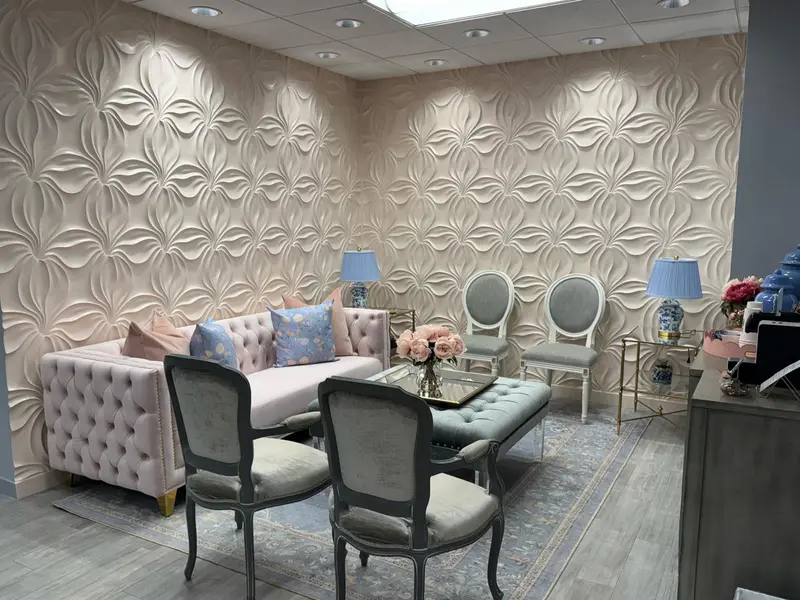
Dental Office Waiting Room
A dental practice's waiting room and reception area, finished in soft gray with applied panel molding, next to a sculpted floral feature wall.
See the photos →Work for unit owners getting ready to sell or settle in, and for boards and managers maintaining corridors, stairwells and building exteriors.
Shared buildings are a large part of the local housing picture. The Census counts 28.6% of units in buildings with five or more homes, and 15.4% in buildings of twenty or more, including 1,510 units in buildings of fifty or more. Another 17.2% sit in two- to four-unit buildings, and 7.4% are attached townhouse-style homes.
Those counts do not distinguish condominiums from rental apartments; they describe structures, not ownership. A local historical survey notes that apartment complexes followed the 1950s subdivisions in the 1960s, so some large buildings are now several decades old. For a condo, the practical point is that painting divides between the owner and the association, and each side has its own paperwork.
The master deed and bylaws define where your unit ends and the common elements begin. Interior walls, ceilings, doors and trim may fall to the owner, but read the documents rather than assuming. Rules may also set working hours, require contractors to check in with management, or ask for elevators and lobby floors to be protected.
A unit in a building from before 1978 may contain lead paint under newer coats. If you live there with a child under six, the Massachusetts Lead Law puts the responsibility for a lead-safe home on the owner, and a Letter of Interim Control is valid for up to two years. Paid work that disturbs more than six square feet per room is also subject to the EPA's renovation rule. Our lead-safe painting page has the details.
Corridors and stair towers belong to everyone, so an owner should not repaint them alone. For a board, a common-area job has to keep every door reachable and every exit clear. That means working in sections, posting notices before each phase, choosing scrubbable, low-odor finishes, and agreeing in advance on daily start and stop times.
Larger buildings may also need a plan for elevator lobbies, trash rooms and the walls along the main entry, where scuffs from moving furniture and deliveries build up fastest.
Siding, trim, balconies and railings may be common or limited common elements, and where they are, the association controls their color. A multi-building complex can phase its exterior repaint by building so the cost lines up with the reserve budget; the exterior painting page describes the prep.
If a condominium building stands inside the Monument Square local historic district, a change in exterior color needs a certificate from the city's Historic District Commission before work begins, while maintenance that keeps the same design and materials is exempt. See our downtown page for more.
If a property manager asks for a certificate of insurance naming the association, the usual reason is that the master policy covers the common elements and the board wants proof the contractor carries its own coverage. AJ Painting is licensed and insured. Ask for the certificate along with the estimate, and tell us who must be listed so it reaches the manager before work is scheduled.
| Units in buildings with 5 or more units | 28.6% (4,941 of 17,247) (U.S. Census ACS 2020–2024 5-year, table B25024) |
| Units in buildings with 50 or more units | 1,510 (8.8%) (U.S. Census ACS 2020–2024 5-year, table B25024) |
| Units in 2–4 unit buildings | 17.2% (2,970) (U.S. Census ACS 2020–2024 5-year, table B25024) |
| Owner-occupied homes | 56.0% of 16,665 occupied units (U.S. Census ACS 2020–2024 5-year, table B25003) |
| Apartment complexes | Built from the 1960s, after 1950s single-family subdivisions (Marlborough Survey of Historic, Architectural, and Cultural Resources (1994–95), via Marlborough Historical Society) |
These jobs were in other towns, not in Marlborough. Each card names the town where the work was done.
A dental practice's waiting room and reception area, finished in soft gray with applied panel molding, next to a sculpted floral feature wall.
See the photos →Inside your own unit, generally yes, but your association's rules control the details. Some require notice to the manager or set work hours even when the color is your choice.
Any building from before 1978 may have lead paint in older layers. Before sanding or scraping corridors, door frames or stair rails, test the paint; if lead is present, the work has to follow lead-safe practices with containment and cleanup.
That depends on whether the master deed treats them as common or limited common elements, which would put the association in charge. Check the master deed and rules before changing them, and inside Monument Square, a visible color change also needs historic district approval.
Yes, if it is phased. Sections are painted in turn with clear notices, open paths and low-odor products, so no one is locked out of their unit.
Square footage, ceiling heights, the number of stairwells and doors, and after-hours requirements all affect the price. Our Massachusetts painting cost guide gives market ranges for reserve planning, and you can ask for the written estimate to be itemized by building or floor.
Ask the manager directly; a certificate of insurance naming the association, a written scope and a schedule are typical requests. AJ Painting is licensed and insured.
Owners, boards and managers can request a free on-site visit and written estimate. Call (508) 258-4325, Mon–Sat 7AM–6PM.
5.0 on Google · 35 verified reviews · Licensed & insured · Written quote in 48h