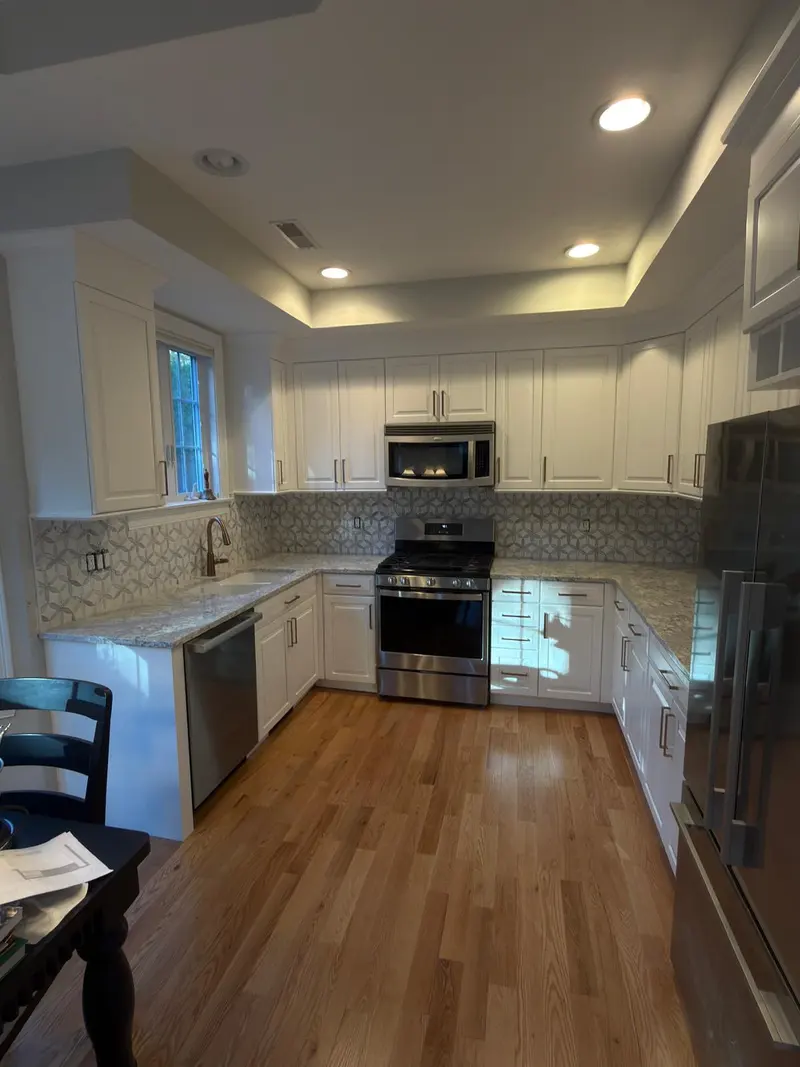
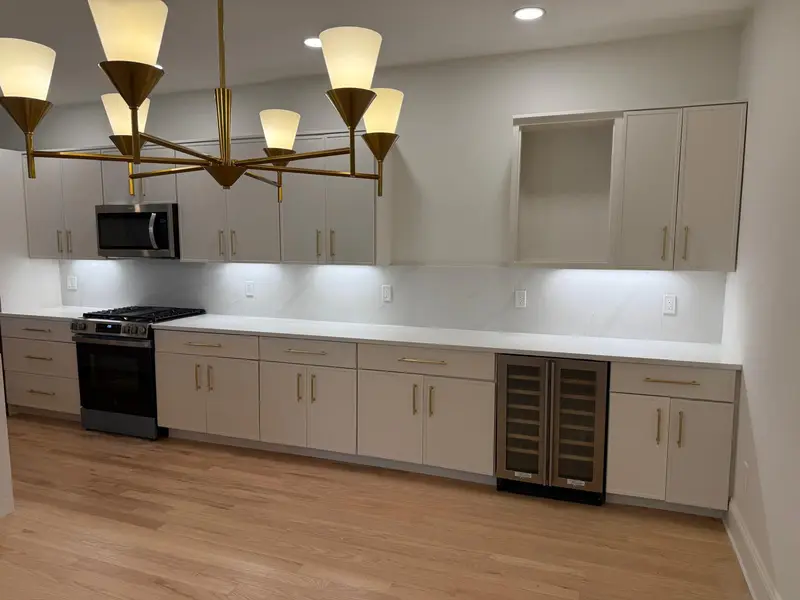
Cabinet painting, NatickIs your Natick kitchen a good candidate for painted cabinets?
Kitchens rarely stay as old as the houses around them. About 15% of the town's current housing units went up in the 1950s, and the median home dates to 1968. A kitchen in a house that old may well have been remodeled since, so the cabinets in a postwar Cape could be 1980s oak, 1990s maple, or a builder set from a more recent update. About 11% of homes went up in 2010 or later, and their kitchens raise a different question: whether factory-finished doors will accept a new color at all.
What the boxes and doors are made of decides whether paint is a good idea, how the surfaces are prepped, and how the finish will look once it cures.
Start by identifying the material
Pull a drawer out and look at the edge of the front, then open a door and look at the back. Solid wood, veneered plywood and MDF all paint well with the right primer. Vinyl-wrapped thermofoil and plastic laminate are the problem cases, because primer bonds poorly and the wrap can lift with heat near a range or dishwasher.
- Red oak: open grain shows through paint unless it is grain-filled; decide which look you want before the job starts
- Maple, birch and cherry: tight grain, smooth painted finish after scuffing and a bonding primer
- MDF doors and panels: paint very well, but raw edges need sealing so they do not swell
- Thermofoil or laminate: usually better replaced or refaced than painted
Paint, reface or replace
Painting makes sense when the layout works, the boxes are solid, and doors are not warped or delaminating. If the kitchen plan itself is the frustration, such as a corner that wastes space or not enough drawers, paint will not fix that, and money is better spent on new cabinetry. Our article on painting versus replacing cabinets walks through the decision, and the kitchen cabinet painting process explains each step.
A painted kitchen is a finish, not furniture-grade lacquer. Plan on touch-ups at the edges of high-use doors over the years, and choose a color with a touch-up can kept on hand.
Built-ins and pantries in older houses
Around 22% of homes here were built before 1940, including Greek Revival and Italianate houses near the center and Queen Anne and Colonial Revival houses in Walnut Hill. Those houses often keep original built-ins: a china cabinet in the dining room, butler's pantry shelving, or cupboards beside a chimney. They have usually been painted many times, and with lead paint banned for homes only in 1978, the bottom layers may contain it.
Sanding those layers creates the most hazardous kind of lead dust. Test first. If lead is present, prep follows the EPA lead-safe rules for pre-1978 homes, with containment, HEPA tools and wet cleanup. Read more on our lead-safe painting page.
Cabinets in condos and smaller kitchens
More than a quarter of local units are in buildings of five or more units, where kitchens tend to be smaller than in a detached house. Painting cabinets in a condo is interior work, but associations may set quiet hours or limits on where materials are staged. When you compare painters, ask where the doors will be finished and how overspray and fumes will be kept out of shared hallways. Our condo painting page covers association logistics.
What the work involves
Doors and drawer fronts are removed and labeled, hardware is bagged, and every surface is degreased, because kitchen grease is the most common reason cabinet paint fails. Then comes scuff-sanding, a bonding primer, filling of dings, and finish coats of a hard-curing cabinet enamel. Most enamels feel dry within hours but take a few weeks to reach full hardness, so slamming and scrubbing should wait.
Every project starts with a free on-site visit and written estimate. If you are also planning walls or trim, see interior painting, or browse homes in East Natick.
Natick at a glance