

Mashpee, MA (Cape Cod)
Whole-Home Interior in Mashpee, MA
A home in Mashpee on Cape Cod with light gray walls, white trim and doors, and a vaulted plank ceiling with exposed beams finished in white.
See the video →Walls, ceilings, trim and stairwells painted with prep matched to the age of the house, from horsehair plaster to postwar drywall seams.
Census estimates put the median year built for local housing at 1968, and the town assessor's 2016 records gave single-family houses an average construction year of 1951. Roughly one unit in five dates from 1939 or earlier. For an interior repaint, those numbers matter because they predict what sits under the current color: the wall material, the trim profiles, and how many coats of older paint have built up on doors and window casings.
That is why an estimate here starts with a walk-through rather than a square-foot formula. Two living rooms of the same size can need very different amounts of patching, priming and dust control.
Around the town center, the houses built during the shoe-industry years include Greek Revival and side-hall homes, a large number of side-hall cottages around Cottage and South Main Streets, and later Italianate, Second Empire and Victorian Gothic houses. Homes of that period usually have plaster over wood lath. Expect hairline cracks that follow the lath, loose keys behind a bulging ceiling, and old patches that flash through a fresh coat if they are not spot-primed.
The population jumped from 13,851 in 1940 to 31,057 by 1970, and the town's master plan points to whole streets from that boom: 1940s Pelham Capes on Virginia, Curtis and Pilgrim Roads, Sherwood Colonials around Nottingham Drive and Sherwood Road, and 1950s slab ranches in the Brookdale Road and Lokerville area. Houses from those decades can have plaster, gypsum board, or a mix after later remodels, so nail pops and taped seams that show under low-angle light are common complaints.
About 11% of local housing was built in 2010 or later. Newer walls are drywall, and the usual problems there are scuffed builder-grade flat paint and cracked corner bead rather than failing plaster.
About 61% of the housing here was built in 1979 or earlier, close to the 1978 federal ban on lead paint for homes. Under the EPA Renovation, Repair and Painting rule, a firm that disturbs paint in a pre-1978 home must be certified and must use lead-safe work practices. Indoors, the risk is fine dust from sanding window sashes, stools, door jambs and stair parts, which settles on floors where children play.
Lead-safe interior work means plastic containment, misting or HEPA-shrouded sanding instead of dry sanding, HEPA vacuuming and wet cleanup at the end of each day. Our lead-safe painting page explains the steps in more detail.
Victorian houses tend to have tall first-floor ceilings and open stairwells that need planks or a stair platform to reach safely. Capes bring the opposite problem: upstairs bedrooms with sloped ceilings and kneewalls, where the line between wall and ceiling color has to be cut cleanly along an angle.
Trim in older houses often carries oil-based paint under the most recent latex. Painting latex straight over glossy oil can peel off with a fingernail, so trim gets cleaned, deglossed and primed with a bonding primer first. Our post on latex versus oil-based paint covers why.
The town has three local historic districts: John Eliot in South Natick, Henry Wilson along West Central Street, and the Natick Center district on North Main Street. Their commission certifies exterior work visible from a public way. Repainting the inside of a house in one of those districts is outside that review, so the only planning involved is your own schedule.
If you live near the center or in South Natick, the more relevant question is the age of the plaster and trim, which in those areas can run well back into the 1800s.
Every project starts with a free on-site visit and a written estimate that lists rooms, surfaces and prep. In an occupied home we work room by room so bedrooms and the kitchen stay usable, cover floors and furniture, and clean up daily. Working hours are Monday through Saturday, 7 AM to 6 PM.
Planning more than one project? See cabinet painting for kitchens and exterior painting for the outside, or read about homes in Natick Center and Felchville.
| Median year housing was built | 1968 (U.S. Census ACS 2020–2024 5-year, table B25035) |
| Housing built 1939 or earlier | about 22% (3,489 of 15,777 units) (U.S. Census ACS 2020–2024 5-year, table B25034) |
| Housing built 1979 or earlier | about 61% of units (U.S. Census ACS 2020–2024 5-year, table B25034) |
| Average year built, single-family homes | 1951 (assessor data, 2016) (Natick 2030+ Comprehensive Master Plan, Ch. 2, Table 2.8) |
| Population growth after World War II | 13,851 (1940) to 31,057 (1970) (Natick 2030+ Comprehensive Master Plan, Ch. 1) |
These jobs were in other towns, not in Natick. Each card names the town where the work was done.
A home in Mashpee on Cape Cod with light gray walls, white trim and doors, and a vaulted plank ceiling with exposed beams finished in white.
See the video →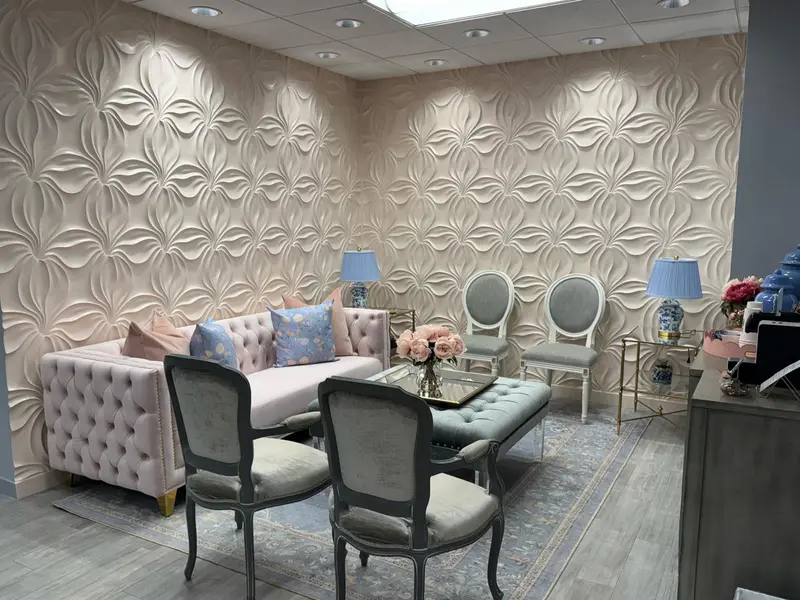
A dental practice's waiting room and reception area, finished in soft gray with applied panel molding, next to a sculpted floral feature wall.
See the photos →Usually not. Most hairline and lath-line cracks can be opened, filled, taped where needed and primed. Plaster that has separated from the lath and sags needs to be re-anchored first. We check by pressing on suspect areas during the estimate visit.
No. The commission certifies exterior work that can be seen from a public way. Interior painting is not part of that review.
It is possible. Lead paint was banned for homes in 1978, and houses from the 1940s and 1950s often have it on original trim, doors and windows under newer coats. A test tells you for certain; until then, prep should follow lead-safe practices. See our lead-safe painting page.
Plaster repair, ceiling height, the amount of trim and doors, and lead-safe prep move the number more than wall area alone. Our interior painting cost guide shows Massachusetts market ranges, and the free on-site visit gives you a written figure for your rooms.
Yes. We work room by room, keep pathways clear and clean up each day so the kitchen and bedrooms remain usable. Rooms with lead-safe containment are closed off until final cleaning is done.
Matte or eggshell on walls in living areas, satin in kitchens, baths and hallways where walls get wiped, and semi-gloss or satin on trim and doors. Older plaster with patches looks smoother in lower sheens.
Book a free on-site visit and get a written estimate that spells out prep for your walls and trim. Call (508) 258-4325, Monday to Saturday.
5.0 on Google · 35 verified reviews · Licensed & insured · Written quote in 48h