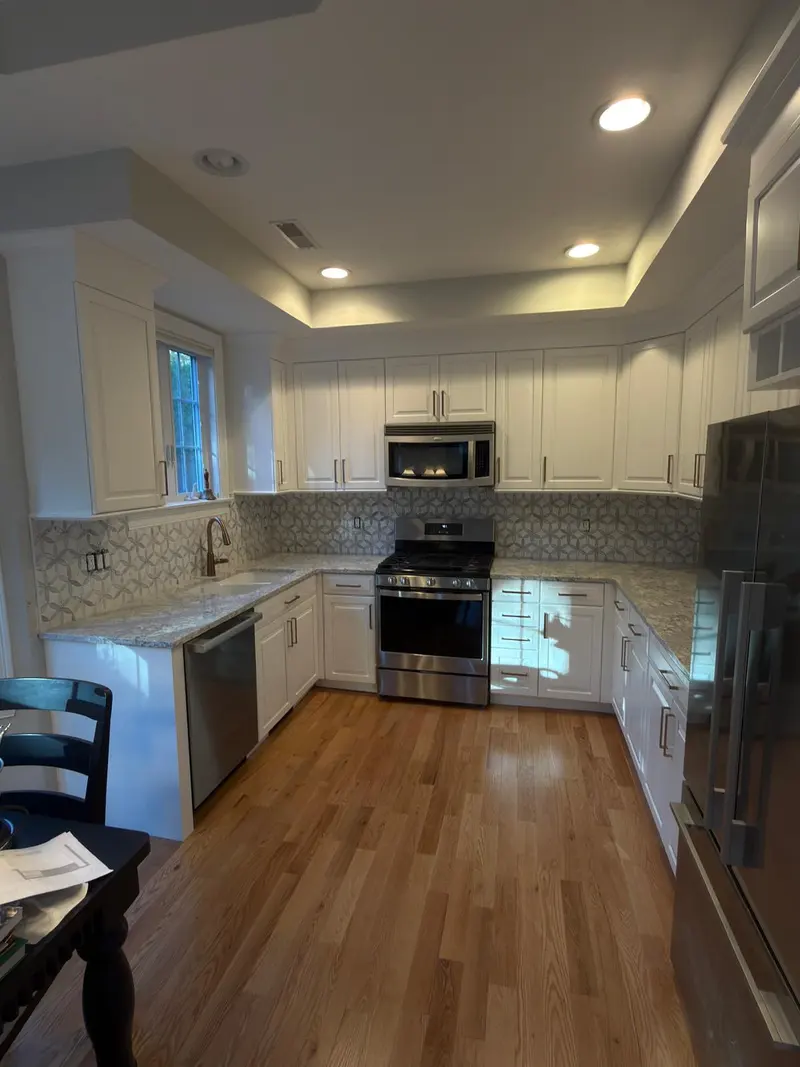
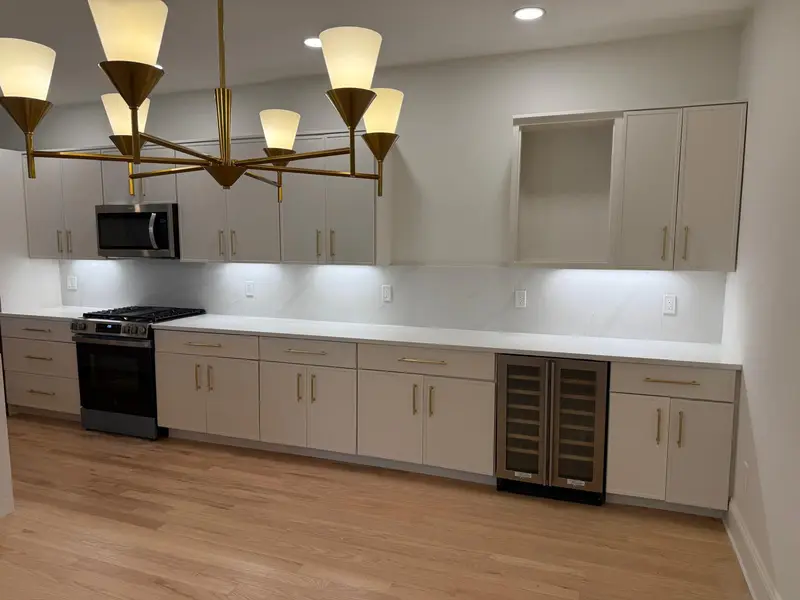
Cabinet painting, MiltonIs your kitchen a good candidate for painted cabinets?
A kitchen is not necessarily as old as the house around it. Milton's median home dates to 1945 by Census estimate, but a kitchen in that house may have been redone in the 1970s, again in the 1990s, or not at all. What matters for cabinet painting is the age and construction of the cabinets themselves, which can only be judged by opening the doors and looking at the boxes, hinges and shelves.
The local housing stock gives a sense of the range. The Census counts 1,347 units built in the 1950s alone and 881 built since 2000, so one owner might be facing site-built mid-century cabinetry and another a factory-made kitchen less than twenty years old. Both can be painted, but the prep and the expectations differ.
What the cabinets are made of
Solid wood and plywood boxes with wood doors are the best candidates. Among wood species, oak has an open grain that shows through paint as a fine texture unless the pores are filled first; maple, cherry and birch are closed-grained and paint more smoothly. Whether that oak texture should stay visible is a choice to make before priming.
MDF doors paint well once sealed, though their cut edges absorb primer and need extra attention. Thermofoil, the vinyl skin pressed over MDF on some newer cabinets, is a poor candidate: if it is already lifting near the oven or dishwasher, paint will not hold it down. Laminate can sometimes be painted with specialty bonding primers, but the result depends on the condition of the surface.
Refinish or replace
Painting makes sense when the layout works, the boxes are square and dry, and the doors are a style you can live with in a new color. Replacement makes more sense when the sink base has water damage, drawer boxes are falling apart, or you want to move the range or add an island. Hinges and pulls can be swapped during a repaint for a modest change in look.
Our article on cabinet painting versus replacement lays out the tradeoffs in more detail, and if you are preparing to sell, the post on pre-listing paint covers where fresh paint tends to matter to buyers.
Older painted cabinets and lead
Census data shows 81.5% of the town's housing built before 1980. Original built-in hutches, pantry cabinets and painted kitchen cabinetry in a pre-1978 house may carry lead paint under later coats, and sanding is the step that turns it into dust. A test on the existing finish answers the question before any scuffing starts. Where lead is present, paid work must follow EPA lead-safe rules for containment and cleanup, explained on our lead-safe painting page.
Building a finish that survives a kitchen
Cabinet doors take more handling than any wall, and grease from cooking is the enemy of adhesion. A durable result depends on degreasing, a light scuff, a bonding primer and two finish coats of a hard cabinet enamel, with doors and drawer fronts labeled so each returns to its own opening. Our walkthrough of the kitchen cabinet painting process shows each stage, and spray, brush or roller compares how each method leaves the surface.
Enamels feel dry within hours but take much longer to reach full hardness, so the first couple of weeks call for gentle use. The Census counts 1,070 local housing units in two-unit buildings; in a two-family house, the same plan may need to cover two kitchens on separate schedules.
- Kitchen wall and base cabinets
- Islands and peninsulas
- Bathroom vanities
- Built-in hutches, pantries and china cabinets
- Hardware removal, relabeling and reinstallation
Milton at a glance