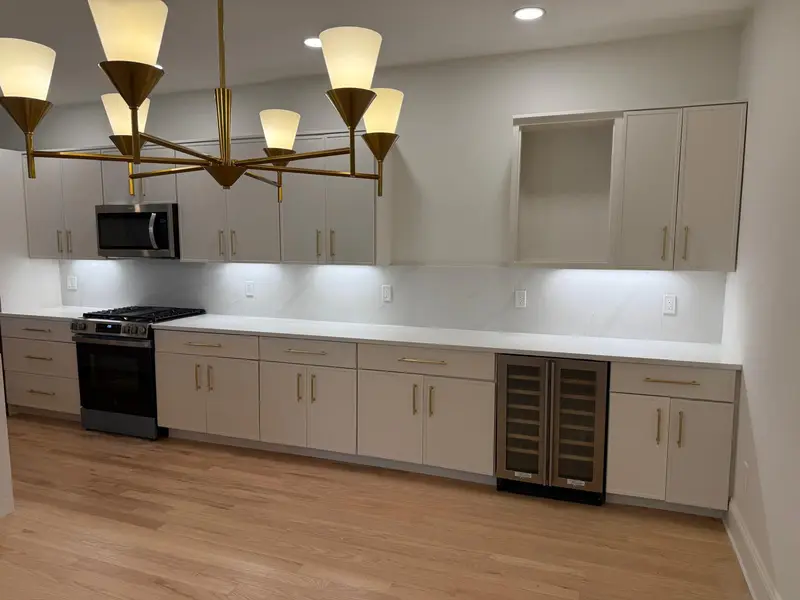
Cabinet painting, LowellRefinishing kitchen cabinets in Lowell homes instead of tearing them out
Kitchens get renovated on their own schedule, independent of when a house was built, so a 1920s two-family can have 1990s oak cabinets and a 1960s ranch can still have its original painted maple. What the housing data does tell you is that the house around those cabinets is old: the median structure in the city dates to 1953 and 75.1% of units predate 1980. That affects prep, because sanding and stripping in an older kitchen can disturb more than the cabinet finish.
The first question is whether the boxes are worth keeping. If the frames are solid wood or plywood, the doors are square and the layout works, paint gives you a new color and a hard, wipeable surface without new countertops, plumbing changes or weeks without a sink. For a fuller look at the trade-offs, read painting vs. replacing cabinets.
What different cabinet materials need
Grease comes off first. Cooking film around the range and on upper door bottoms will stop primer from bonding, so cleaning with a degreaser comes before any sanding.
- Solid oak and ash: the pores telegraph through paint unless a grain filler goes on first; decide upfront whether you want texture or a smooth finish
- Maple, birch and cherry: tight grain, paints smoothly after degreasing, scuff-sanding and a bonding primer
- MDF doors: take paint very well, but cut edges must be sealed so they don't swell
- Thermofoil or laminate: poor candidates; the film can lift, and paint doesn't change that
- Site-built painted cabinets in older houses: may carry several old coats that need testing before sanding
Old built-ins and lead
Pantries, china cabinets and kitchen built-ins in pre-1978 houses can carry lead in their lower coats. Federal rules draw the lead-safe line for contractors at six square feet of painted surface per room; the kitchen is sealed off with plastic, sanding is done with HEPA-attached tools, and cleanup is verified before the room is used again. A kitchen's worth of doors and face frames adds up to far more area than that.
For factory-finished cabinets installed in recent decades, lead is not the concern, but the counters, walls and floor around them still need masking and dust control. Details on the rules are on our lead-safe painting page.
How a cabinet repaint is sequenced
In the standard method, doors and drawer fronts are removed and tagged with their positions, then coated lying flat so the coating levels without runs. The cabinet boxes stay on the wall and are coated there once counters, floors and appliances are covered. The steps are degrease, scuff-sand, fill dents and open grain where wanted, prime with an adhesion primer, then two topcoats of a cabinet-grade enamel. Hinges and pulls go back on after the finish has hardened enough to handle.
Cure time matters more than dry time. Enamels can feel dry within hours but take weeks to reach full hardness, so the first stretch after reinstallation calls for gentle use: no slamming doors and no wet towels draped over them. More on each stage is in our cabinet painting process article.
Kitchens in multi-unit buildings
More than a quarter of the city's units (26.6%) are in buildings with two to four units, and 56.8% of occupied homes are rented. If you own one of those buildings, refinishing cabinets is a way to freshen a rental kitchen between tenants without a full renovation. If a tenant household includes a child under six, the Massachusetts Lead Law adds owner obligations in a pre-1978 building, so factor that into the timing.
Neighborhood pages for Centralville, Sacred Heart and Pawtucketville describe the local housing in more detail.
Lowell at a glance