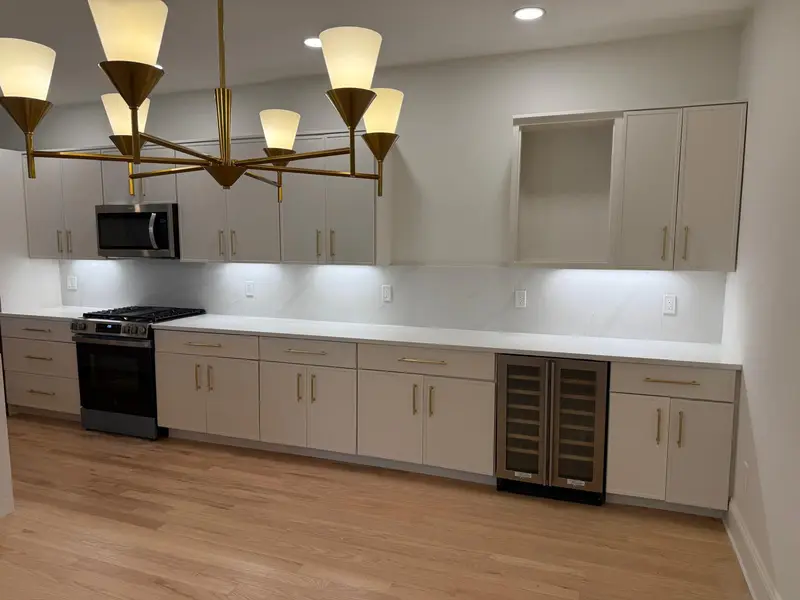
Cabinet painting · BurlingtonRefinishing kitchen cabinets in Burlington instead of replacing them
Burlington's town master plan describes a housing stock that is aging and being updated: as ranches and split levels from the postwar subdivisions get older, many owners are modernizing and expanding them. When a kitchen is part of that update, it is worth pricing a repaint of the existing boxes and doors before ordering new cabinetry.
If the boxes are square, the drawers run and the doors aren't delaminating, paint can give a dated kitchen a new color without the cost of new boxes, while keeping the layout, counters and plumbing where they are. If the boxes are failing, paint won't fix that, and we will say so on the visit.
What your cabinets are made of matters
Census data put Burlington's median home at 1972, with 55.1% of units built between 1950 and 1979 and 23.9% built in 2000 or later. With housing that spread across the decades, a kitchen could hold original cabinets or recent replacements, so we identify the material before we recommend anything.
- Solid hardwood or hardwood-veneer plywood. Good candidates. Open-grain oak shows its texture through paint unless the grain is filled first; tell us whether you want that texture visible or smoothed out.
- Painted wood that was painted before. Workable, but old layers must be checked for adhesion. In a pre-1978 kitchen, sanding old paint on cabinets falls under lead-safe rules if it passes the EPA's 6-square-foot-per-room threshold.
- MDF doors. Paint well once edges are sealed, since raw MDF edges swell and fuzz if they take on water.
- Thermofoil or laminate. Vinyl-wrapped or plastic-faced doors can be painted only with special primers, and peeling foil can't be painted at all. Replacement doors may be the better answer.
The process, step by step
Cabinet paint lives a harder life than wall paint: hands, steam, grease and cleaning sprays. The finish lasts only as long as the prep under it.
- Doors, drawer fronts and hardware come off and are labeled so every piece goes back to its own opening.
- All surfaces are degreased with a cleaner that removes cooking residue; paint will not stick to a film of grease.
- Glossy factory finishes are scuff-sanded, dust is removed, and a bonding primer goes on.
- Two finish coats of a urethane-modified or catalyzed cabinet enamel go on, sprayed or brushed and rolled depending on the door style.
- The kitchen is masked and ventilated, and boxes are painted in place without overspray on counters or floors.
Lead-safe work in older kitchens
About 62% of Burlington homes were built before 1980, according to the American Community Survey. If your kitchen still has painted original cabinets or trim from before 1978, the EPA Renovation, Repair and Painting rule applies once sanding goes beyond small touch-ups. The kitchen is then contained and cleaned to that standard. Our lead-safe painting page explains what that looks like day to day.
Living with the job in progress
You can use the sink and fridge for most of the job, but plan on limited cabinet access while boxes and doors cure. Enamels feel dry within hours but take longer to harden fully, so the first week calls for gentle cleaning and soft-close bumpers back in place.
If you want the kitchen walls repainted too, choosing the cabinet and wall colors together avoids a mismatch; see our Burlington interior painting page for how we handle the room around the cabinets.
Burlington at a glance