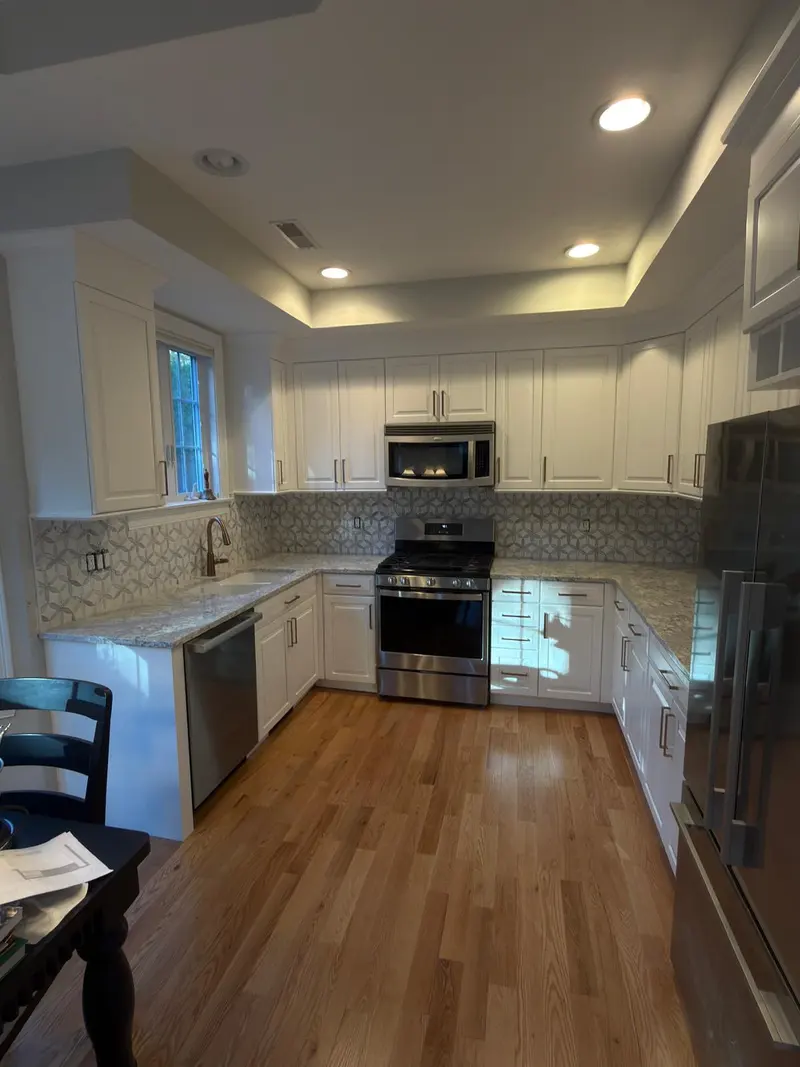
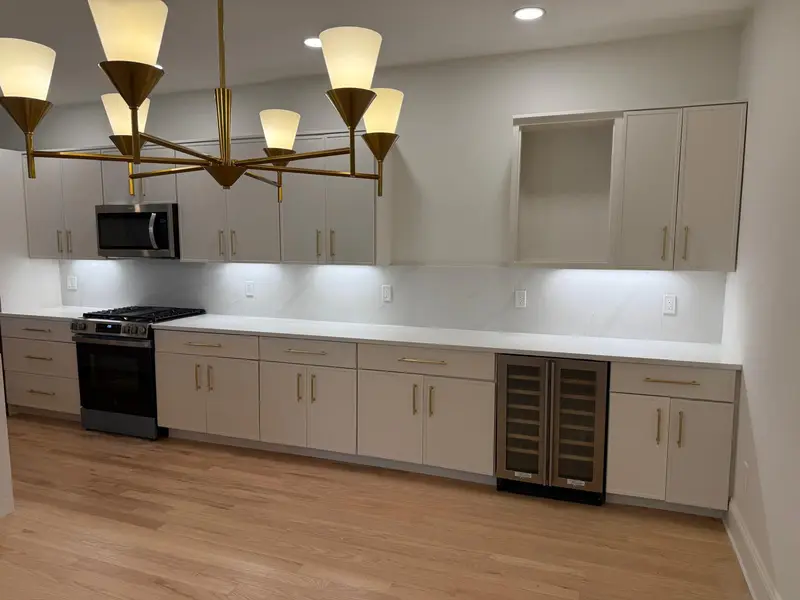
Cabinet painting, Brockton MARefinishing kitchen cabinets in postwar houses and much older ones
The decade that added the most housing here after the pre-1940 era was the 1960s, with 17.9% of today's units, followed by the 1970s at 13.9% and the 1950s at 12.1%. Only 7.9% of homes were built in 2000 or later. Together the 1950s through 1970s account for 43.9% of units. Another 31.6% predate 1940, and in those houses the kitchen you see now may be a later remodel rather than the original.
When the boxes are solid but the finish, color or door style looks its age, paint is worth considering. Painting keeps the layout, countertops and plumbing in place while changing what you see every day.
What the cabinets are made of matters most
A test on a hidden spot identifies the existing finish, since varnish, lacquer and older paint each call for a different primer.
- Solid oak or ash doors: open grain shows through paint unless it is filled; a grain filler gives a smooth modern look
- Maple and birch: tight grain, paints very smoothly once the factory finish is scuffed and primed
- MDF or painted-grade doors: easy to coat, but edges that have swelled from moisture need sanding and sealing first
- Thermofoil or laminate: needs a specialty bonding primer; peeling thermofoil has to be removed, not painted over
- Site-built cabinets in older houses: may have many old layers that should be tested for lead before sanding
Built-ins and pantry cabinets in pre-1940 homes
About 31.6% of units date from 1939 or earlier. Where original pantry cabinets, china cupboards or butler's-pantry built-ins survive, they may carry several generations of paint. Any surface from before 1978 may carry lead paint under the top layers, and sanding cabinet doors makes exactly the fine dust the EPA lead-safe rule is meant to control. Paid work on those pieces calls for containment and HEPA cleanup; our lead-safe page explains what that looks like in a kitchen.
Paint, refinish or replace?
Painting is a strong option when the cabinet boxes are square, the doors are not delaminating, and the layout works. Replacement is the better call if the boxes have water damage under the sink, the drawers are falling apart, or you want to move appliances. Our comparison of refinishing versus replacing kitchen cabinets lays out that decision in more detail.
Hardware is worth deciding early. If new pulls have a different hole spacing, the old holes are filled and sanded before priming, which is far easier to do with the doors off than afterward.
Kitchens in two- and three-unit buildings
In a city where 27.4% of housing units are in buildings with two to four units, an owner may have a kitchen on every floor. Painting the cabinets in a vacant unit between tenants avoids working around daily cooking. Matching the same color and coating across units also simplifies later touch-ups, since one can of paint covers repairs anywhere in the building.
If the walls around the cabinets need painting too, it is easier to schedule both together; see interior painting for that side of the work.
Brockton at a glance