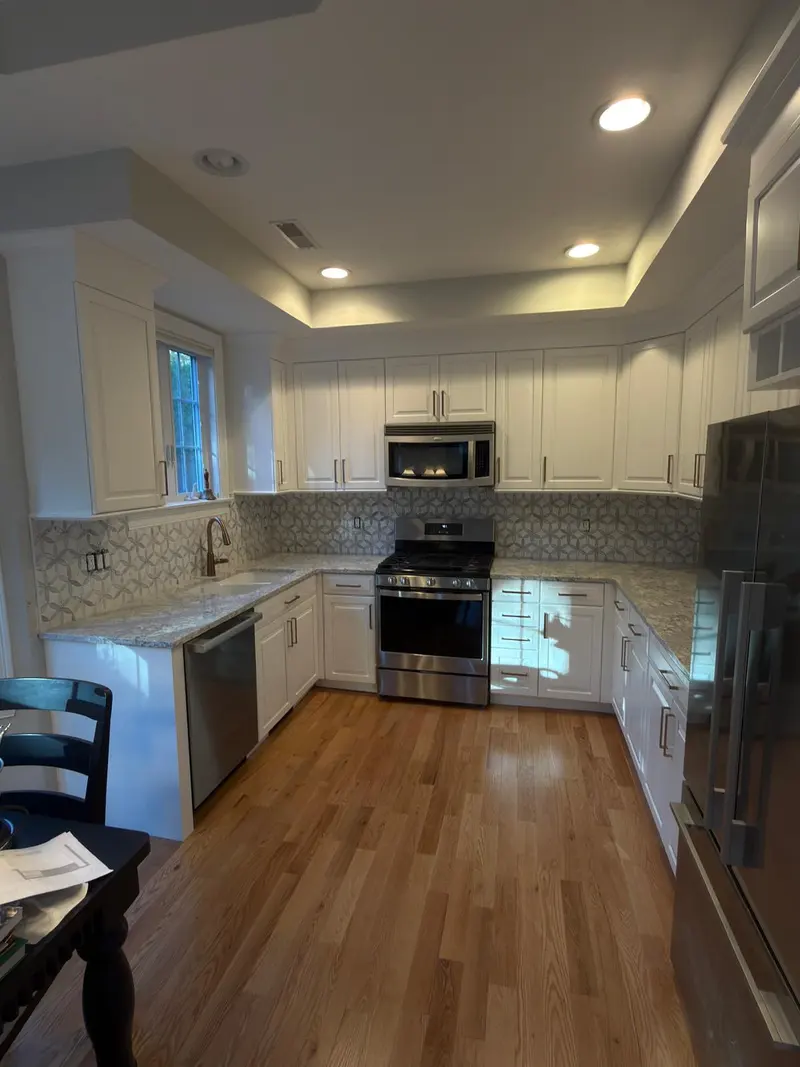
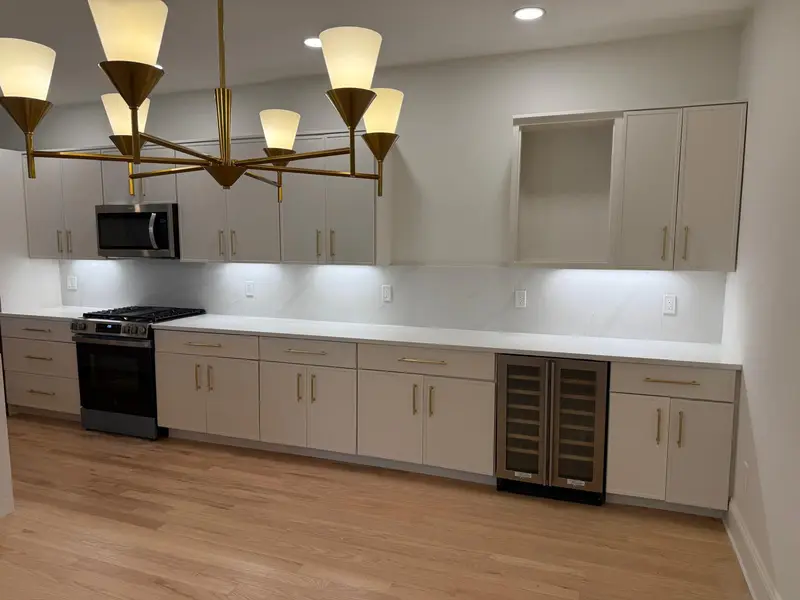
Cabinet painting, Bellingham MARefinishing a dated kitchen in a Bellingham house instead of replacing it
Of the 6,691 housing units in town, about 37% were built in the 1960s or 1970s, and the median year of construction is 1973. Some of those kitchens have been remodeled since and some have not. Where the original cabinet boxes are still solid but the doors look tired, there is a choice to make. Painting is the middle path between living with the old finish and paying for a full replacement.
The town's median owner-occupied home value is about $450,700 in recent Census estimates. Whether a kitchen update is for your own use or ahead of a sale, the cost of new cabinetry is worth weighing against refinishing what is already there.
Is your kitchen a good candidate?
Open-grain woods like oak show their texture through paint unless the grain is filled first. Whether that texture is acceptable is a decision to make before work starts. The comparison of refinishing versus replacing kitchen cabinets covers layout and budget questions in more depth.
- Solid wood doors and face frames, whether oak, maple, cherry or birch, paint well once the grain is dealt with
- Wood veneer over plywood or particleboard can be painted if the veneer is not lifting or chipped
- Thermofoil or vinyl-wrapped doors are poor candidates, since the wrap can peel and paint does not hold well on it
- Boxes with water damage under the sink or swollen particleboard should be repaired or replaced before any finishing
Why degreasing and primer decide the result
Cabinet doors near the range carry years of cooking residue, and paint will not bond to grease. The process starts by removing doors, drawers and hardware and labeling each piece, then washing every surface with a degreasing cleaner. After that comes scuff sanding, then a bonding primer suited to the existing finish. If the original finish is a catalyzed lacquer or conversion varnish, primer selection matters even more.
Finish coats are a hard-curing enamel, such as a urethane-modified alkyd or waterborne alkyd, applied in thin coats. Finishing doors flat in a separate, dust-controlled area lets each coat level out and dry evenly. Paint feels dry within hours but takes days to weeks to reach full hardness, so the first couple of weeks call for gentle handling. Our post on the kitchen cabinet painting process goes step by step.
Older kitchens and lead-safe prep
Roughly 62% of local housing was built before 1980. Cabinets that were painted on site decades ago, or built-in cupboards and pantries in older houses, may carry lead-based paint. Sanding those surfaces in a pre-1978 home, past six square feet in a room, triggers the EPA lead-safe work rules: containment, HEPA dust collection and verified cleanup. A quick test before sanding settles the question; details are on the lead-safe painting page.
Townhouses, condos and rentals
Attached single-family homes make up about 8% of units here, and around 17% are in buildings of two or more units. Kitchen cabinets inside a unit are generally the owner's to paint, though a building may limit spray equipment, set work hours or require a contractor's certificate of insurance before work starts. About 21% of occupied homes are rented, and for a landlord, painting cabinets between tenants is one way to update a unit without a full remodel; tenants need the owner's written approval first.
When the kitchen walls and ceiling need fresh paint as well, the Bellingham interior painting page covers that side of the work.
Bellingham at a glance