
Mashpee, MA (Cape Cod)
Whole-Home Interior in Mashpee, MA
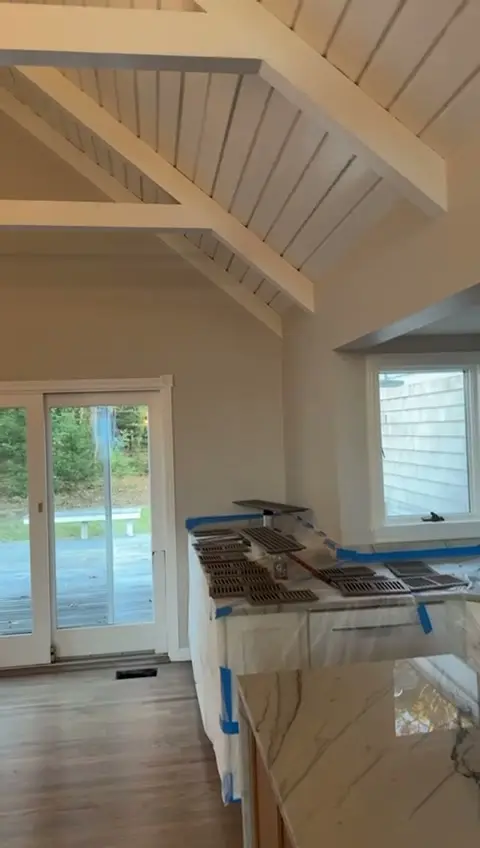
A home in Mashpee on Cape Cod with light gray walls, white trim and doors, and a vaulted plank ceiling with exposed beams finished in white.
See the video →Walls, ceilings, trim and doors painted with prep that fits the age of the house, whether that means old plaster or newer drywall.
Shrewsbury's housing does not belong to one era. The Census puts the town's median year built at 1979, and the stock splits almost evenly around it: 51.0% of the 15,393 housing units predate 1980 and 49.0% came later. Inside a house, that date decides a lot: what the walls are made of, what the trim looks like, and whether lead may sit under the old coats.
The biggest decade in the Census year-built table is the 1990s, with 3,294 units. The 1950s come second with 2,351. A room from each of those decades can look similar once furniture is in place, yet the prep behind a good repaint is quite different, and an estimate should be written for the one you actually own.
About 11.4% of local units were built in 1939 or earlier, before drywall became the standard wall surface. Plaster over lath takes paint well when it is sound. The trouble spots are hairline cracks, bulges where the plaster has pulled away from the lath, and earlier patches that read as flat islands under a fresh sheen. Those need to be stabilized, filled and primed first, or they show through within a season.
Mid-century construction can go either way. A house from the 1950s may have traditional plaster, gypsum board, or a plaster skim over gypsum lath. Removing a switch plate or looking at the edge of an attic hatch is usually enough to tell which you have, and it changes how cracks and dents get repaired.
Walls in houses from the 1980s onward are far more likely to be drywall, and its problems are different: nail pops, tape seams that show under low afternoon light, and corner bead dented by years of vacuum cleaners. If the walls still carry a flat original finish, they probably scuff whenever someone wipes them. A repaint is a good moment to switch to eggshell or satin in hallways, kitchens and kids' rooms. Our comparison of premium and builder-grade paint explains what that upgrade gets you.
Tall spaces deserve their own line on an estimate. A cathedral ceiling, a two-story entry or an open stairwell needs staging or long-reach equipment, which takes setup time that a simple room count would hide.
In a home built before 1978, the paint most likely to contain lead is on surfaces that have been recoated many times: window sashes and stools, door jambs, baseboards and stair parts. Sanding or scraping those releases fine dust that settles on floors and windowsills. Testing the existing paint before prep starts settles the question.
Under the EPA's Renovation, Repair and Painting rule, paid work that disturbs more than 6 square feet of painted surface per room in a pre-1978 home must be done by a certified firm using lead-safe practices. Our lead-safe painting page explains what containment and cleanup involve, room by room.
Scope is easiest to compare between estimates when it is written out item by item. Before the crew arrives, the checklist in how to prepare your home for interior painting helps you clear rooms, and the guide to painting with kids and pets at home covers keeping the household running during the work. If the kitchen cabinets are on your list too, see our cabinet painting page for Shrewsbury.
| Median year housing was built | 1979 (±3) (U.S. Census ACS 2020–2024 5-year, table B25035) |
| Housing units built before 1980 | 51.0% (7,849 of 15,393) (U.S. Census ACS 2020–2024 5-year, table B25034) |
| Housing units built in 1939 or earlier | 11.4% (1,762) (U.S. Census ACS 2020–2024 5-year, table B25034) |
| Housing units built 1990–1999 | 21.4% (3,294), the largest decade (U.S. Census ACS 2020–2024 5-year, table B25034) |
| EPA lead-safe threshold for interior work | More than 6 sq ft of disturbed paint per room in pre-1978 homes (U.S. EPA, Renovation, Repair and Painting Program) |
These jobs were in other towns, not in Shrewsbury. Each card names the town where the work was done.
A home in Mashpee on Cape Cod with light gray walls, white trim and doors, and a vaulted plank ceiling with exposed beams finished in white.
See the video →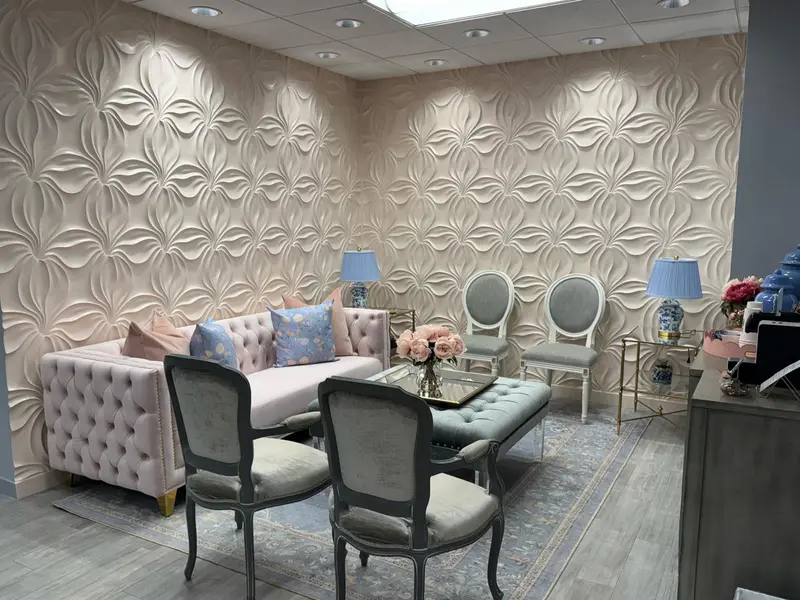
A dental practice's waiting room and reception area, finished in soft gray with applied panel molding, next to a sculpted floral feature wall.
See the photos →It could be either, or a plaster skim coat over gypsum lath. Look behind a switch plate: a thick, hard layer suggests plaster, while a thin paper-faced board means drywall. The answer changes how cracks are repaired and how much patching to expect.
Not always. Sound walls in good condition can usually take two coats of finish paint. Primer is worth it over patched areas, stains, glossy surfaces, or a big change such as deep red to pale gray, where it keeps the old color from ghosting through.
If the house was built before 1978, yes, it might. Original window sashes, stair parts and door trim are the usual suspects. A test before sanding tells you whether federal lead-safe practices apply. More than half of the town's housing predates 1980, so it is a fair question to ask about any older property.
Yes. Interior work can move room by room, with furniture shifted and covered and the finished rooms returned to use as each one dries. Ask for the room order in writing so you know which bedroom will be out of use on which day.
It works well, since interior paint does not depend on outdoor weather. Heat and ventilation still matter for drying. Our post on winter interior painting in Massachusetts goes through what to expect.
Ceiling height, the amount of trim, wall repairs, lead-safe requirements and the number of color changes move the price more than square footage alone. For statewide figures, see the interior painting cost guide and the Shrewsbury painting cost page. Your own figure comes from a written estimate after a walk-through.
AJ Painting is licensed and insured and holds a 5.0 Google rating across 35 reviews. Book a free on-site visit and written estimate at (508) 258-4325, Monday through Saturday, 7AM to 6PM.
5.0 on Google · 35 verified reviews · Licensed & insured · Written quote in 48h