
Mashpee, MA (Cape Cod)
Whole-Home Interior in Mashpee, MA
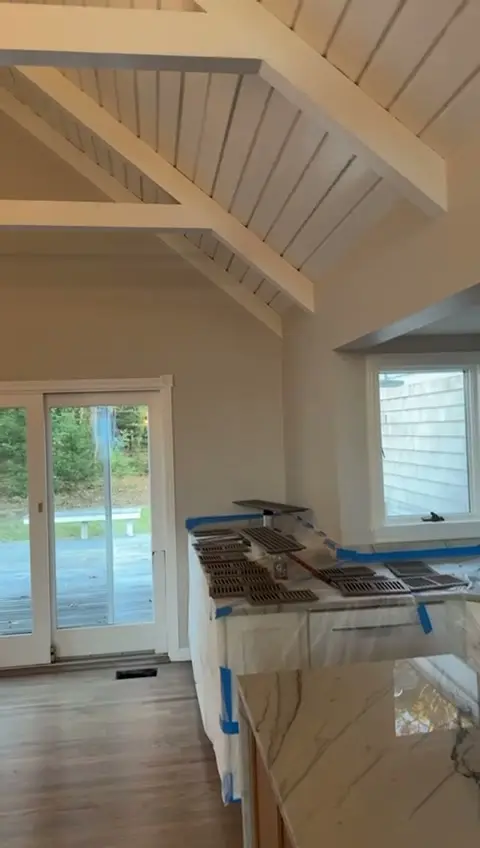
A home in Mashpee on Cape Cod with light gray walls, white trim and doors, and a vaulted plank ceiling with exposed beams finished in white.
See the video →Walls, ceilings, trim and doors repainted in Northbridge houses, from Whitin-era mill housing to 1990s subdivisions, with prep matched to the age of each room.
Census estimates put the median construction year of local housing at 1973, with a margin of error of seven years either way. That middle point hides a wide spread. About a quarter of homes (24.7%) date from 1939 or earlier, while 27.4% went up between 1980 and 1999 and 16.8% in 2000 or later. A room in an 1860s Whitinsville duplex and a room in a 1995 Colonial need different handling before a single coat goes on.
So the first question is less about color than about what the walls are made of and what layers are already on them.
The Whitin family built nearly 1,000 worker dwellings between the 1820s and 1920s, according to the National Park Service, and surviving groups still line Fletcher, High and Forest Streets. Houses from that long building period may have plaster walls and ceilings rather than drywall. Plaster takes paint well, but it shows its history: hairline cracks over doorways, bulges where the keys behind it have let go, and patches from past repairs that read differently under a fresh sheen.
Good interior work on plaster means cutting out and filling cracks so they do not telegraph through, re-securing loose areas before skim-coating, and priming patches so the finish coat dries evenly. A flatter sheen on ceilings hides the gentle waves that old plaster ceilings tend to develop.
By Census counts, 55.9% of housing units in town were built before 1980. That bracket includes 1978 and 1979, so the strictly pre-1978 share is slightly lower; treat that figure as an upper bound. Any house built before 1978 could have lead-based paint somewhere under newer coats. The EPA estimates that about three-quarters of U.S. homes built before 1978 still contain some.
Inside, the federal Renovation, Repair and Painting rule covers paid work that disturbs more than six square feet of paint per room in pre-1978 housing. Scraping a window stool, sanding a stair stringer or stripping a door can pass that mark quickly. Lead-safe practice means containment, misting instead of dry sanding, HEPA cleanup and a verified clean room at the end; our lead-safe painting page walks through each step.
The 1950s and 1960s added 1,303 units between them, and the 1980s and 1990s added another 1,962. Rooms from those decades are more likely to be drywall, which shifts the work toward nail pops, taped seams that have cracked at ceiling corners, and trim with several coats of builder paint. Where the surfaces are sound, a bedroom or hall may need only patching, primer on the repairs, and two finish coats.
Kitchens and baths call for a moisture-resistant finish. If the kitchen cabinets also need attention, the cabinet painting page covers that separately.
Interior paint can go on in any month, which makes late fall and winter a sensible time to book rooms once outdoor work is off the table. Paint still needs the room within its label temperature range while it cures, and fresh air helps, so a heated house with a window cracked works well. Our article on winter interior painting in Massachusetts covers ventilation and drying times.
| Median year housing was built | 1973 (±7 years) (U.S. Census ACS 2020–2024 5-year, table B25035) |
| Housing units built 1939 or earlier | 24.7% (1,770 of 7,173) (U.S. Census ACS 2020–2024 5-year, table B25034) |
| Housing units built before 1980 | 55.9% (4,007 of 7,173) (U.S. Census ACS 2020–2024 5-year, table B25034) |
| Whitin worker housing | Nearly 1,000 units built between the 1820s and 1920s (National Park Service, Blackstone River Valley NHP) |
| Indoor lead-safe threshold | More than 6 sq ft of paint disturbed per room, pre-1978 housing (U.S. EPA, Renovation, Repair and Painting Program) |
These jobs were in other towns, not in Northbridge. Each card names the town where the work was done.
A home in Mashpee on Cape Cod with light gray walls, white trim and doors, and a vaulted plank ceiling with exposed beams finished in white.
See the video →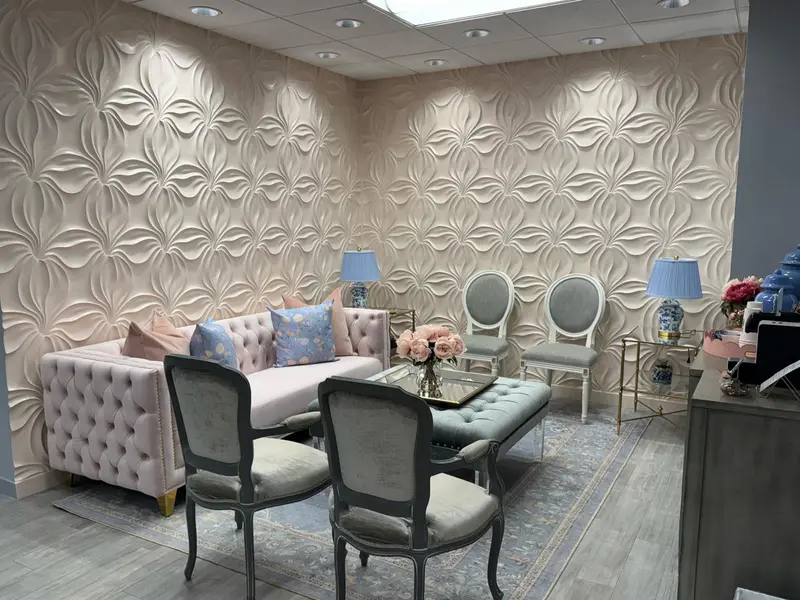
A dental practice's waiting room and reception area, finished in soft gray with applied panel molding, next to a sculpted floral feature wall.
See the photos →Not usually. Hairline cracks can be opened, filled and primed. Sagging sections that have pulled away from the lath need to be re-attached with plaster washers or repaired first. Covering a ceiling with drywall is a separate carpentry decision, not a painting step.
A certified lead inspector or an EPA-recognized test kit can tell you. If the house was built before 1978 and the paint has not been tested, the safe assumption is that it may contain lead, and any paid work disturbing more than six square feet per room should follow lead-safe rules.
Yes. A trim-only job makes sense when the wall color is still fine but baseboards and casings are chipped or yellowed. Doors can be painted in place or taken down and done flat for a smoother finish.
Sanding floors throws fine dust that settles into wet paint, so the usual order is floors first, then walls, with a final touch-up on baseboards after the floor finish has cured. If the floors are only getting a screen-and-recoat, painting first is fine.
The number depends on how many rooms, ceiling height, how much plaster repair or lead-safe prep is involved, and whether trim and doors are included. See our interior painting cost guide for Massachusetts for market ranges; AJ Painting gives a written estimate after a free on-site visit.
Yes. The exterior painting page covers clapboard, shingle and siding work, and the Whitinsville, Rockdale and Linwood pages describe each village's housing.
AJ Painting is licensed and insured. Book a free on-site visit and written estimate at (508) 258-4325, Monday to Saturday, 7AM to 6PM.
5.0 on Google · 35 verified reviews · Licensed & insured · Written quote in 48h