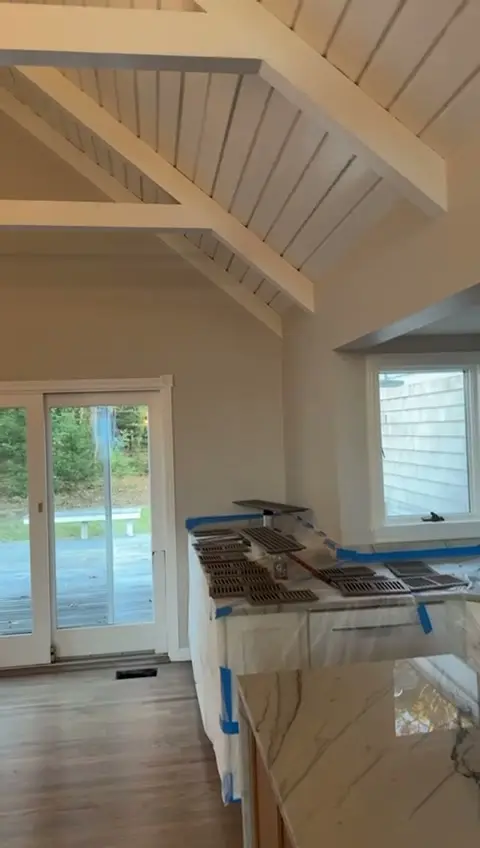
Interior painting, Bolton MAInterior painting for a town whose median house was built in 1988
Census figures put the median construction year of Bolton's housing at 1988, and 983 of its 2,084 units (47.2%) went up in 1990 or later. The 1990s alone added 381 units, more than any other decade in the table. In houses of that age the walls are generally drywall rather than plaster, so the repaint questions are nail pops, cracked corner bead and how well the original flat paint has held up.
The other end of the range is real too. The Census counts 252 units (roughly 12%, with a wide margin of error) built in 1939 or earlier, and the National Register nominations for Bolton Center and the Pan describe mostly late Colonial, Federal and (in Bolton Center) Greek Revival houses. Houses of that age are likely to have plaster walls and ceilings, and woodwork that may carry many layers of old paint.
Drywall houses from the 1980s through the 2010s
Newer interiors fail in predictable places: tape seams that telegraph through a satin finish, screw heads that pushed out as framing dried, and hairline cracks over doorways where the house settled. Fixing those before painting is what makes a fresh coat look flat and even under raking window light.
Two-story foyers and open stairwells are where ladder work and staging come in. Ceilings in great rooms often show roller lap marks under side lighting, so they are best done in one continuous pass with a flat ceiling paint. Finish choice matters as much as color: eggshell or satin wipes clean in halls and kitchens, while flat hides drywall flaws on large wall planes. The finish comparison lays out where each sheen works.
Plaster, old trim and lead in the pre-1980 houses
According to the same Census table, 827 Bolton units (39.7%) were built before 1980, and lead-based paint for homes was banned only in 1978. That covers the 1960s and 1970s houses as well as the antiques: 506 units date from 1960 to 1979. Sanding, scraping or cutting into old painted surfaces in those houses can release lead dust, so the work needs containment, careful cleanup and lead-safe practices. The details are on our lead-safe painting page.
Plaster brings its own prep. Cracks need to be opened and filled rather than just caulked, loose areas re-secured, and glossy oil-based trim deglossed and primed with a bonding primer before latex goes on top. Skipping that step is a common reason new latex peels off old oil trim in strips.
- Plaster walls: crack repair with setting compound, then a primer that seals patches so they do not flash through
- Painted woodwork: testing whether the old layer is oil or latex before choosing the primer
- Wide window casings and paneled doors: brushed rather than rolled, to keep the profile crisp
- Ceilings with old water stains: a stain-blocking primer before the finish coat
What a full interior job covers
A written estimate should list which rooms, which surfaces (walls, ceilings, trim, doors, closets), how many coats and what repairs are included. With 94.7% of Bolton's occupied homes lived in by their owners, the job is likely to happen around a household, so the room order, furniture moves and drying time matter as much as the paint itself. The prep guide explains what to clear before a crew arrives, and the pets and kids guide covers low-odor products and keeping rooms closed off.
Doing it in the colder months
Interior paint is not limited by the outdoor season, which makes November through March a practical window when exterior work stops. Heated rooms dry fine, though ventilation and overnight temperature still affect cure time. Our winter interior painting article covers what changes when windows stay shut.
Bolton at a glance