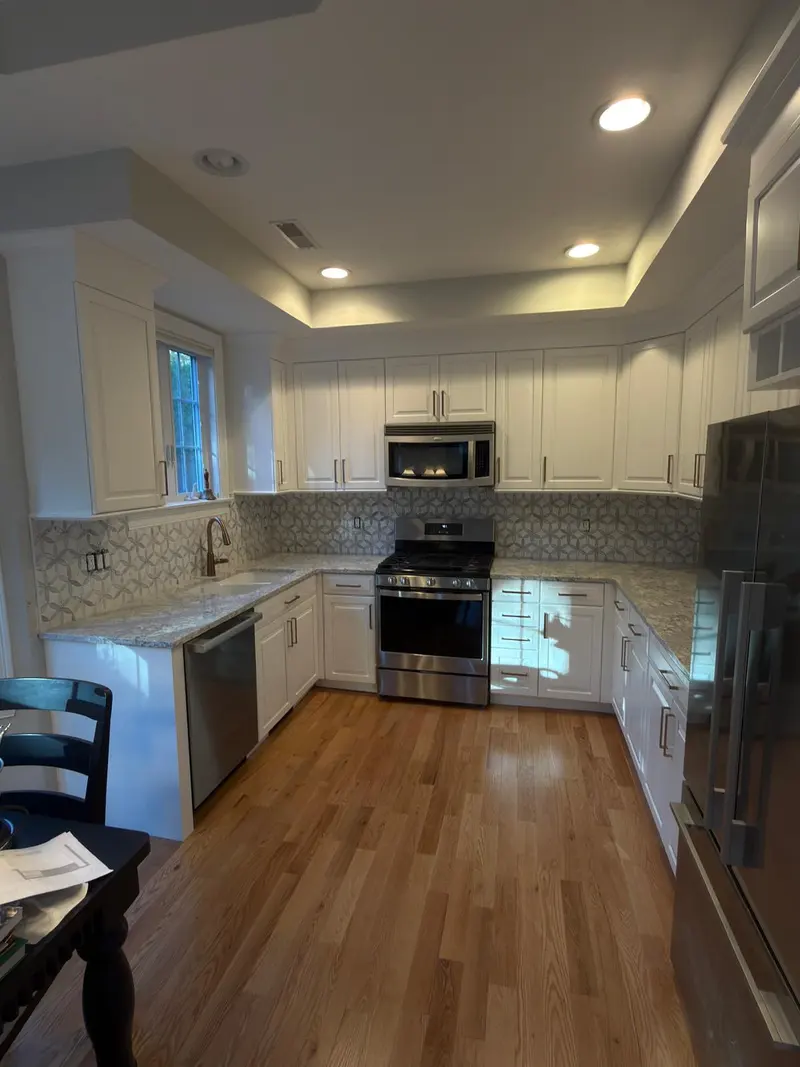
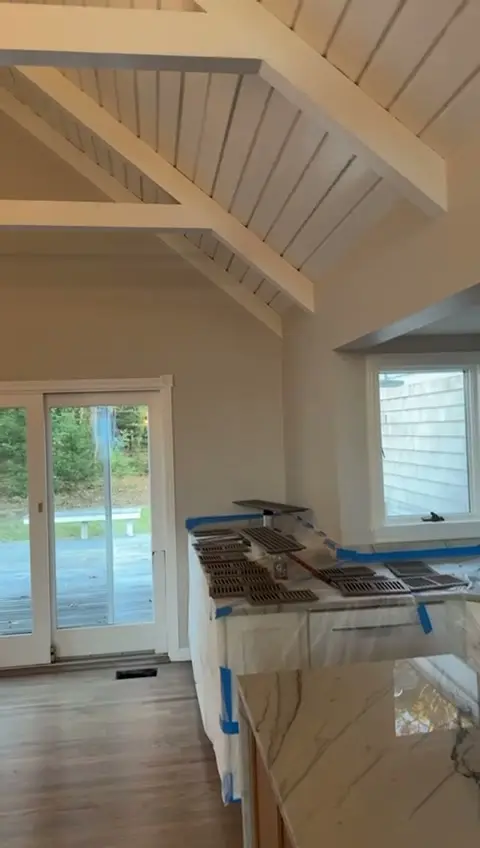
Interior painting, Bedford MAPainting rooms in a town where the median house dates to 1976
Census figures put the median construction year for local housing at 1976, but that middle number hides a split. The 1950s are the biggest single decade in the housing table, at 19.6% of units, and the years 1990 through 2019 together account for another 37.9%. Inside, those two groups of houses ask for different preparation even when the paint going on the walls is the same.
A room from the postwar decades can carry seventy years of coatings on its window casings and baseboards, plus the hairline cracks and nail pops that come with age. A room from the 2000s may instead show scuffed flat paint, worn corners and taped seams that have started to telegraph. Knowing which you have decides how much of the job is prep and how much is painting.
Lead-safe rules for indoor work
Of the roughly 5,970 housing units in town, 54.1% were built before 1980. The census brackets do not separate 1978 and 1979, so the federal pre-1978 cutoff falls inside that group rather than exactly at its edge. Original window sashes, stair rails and door jambs are places where older lead-based coatings can survive under newer paint, because parts like these were often repainted rather than replaced.
Indoors, EPA's Renovation, Repair and Painting Rule applies once paid work disturbs more than six square feet of paint in a single room of a pre-1978 home. That is a small area: scraping one window and its casing can pass it. Above that line, the work calls for plastic containment, restricted scraping and sanding methods, HEPA cleanup and a cleaning check at the end. The lead-safe painting page walks through each step, and a test of the specific surfaces before work starts settles whether the rule applies.
Ceilings, walls and trim, in that order
Ceilings go first so spatter lands on walls that have not been painted yet. Older ceilings sometimes have a texture or a calcimine-type coating that lifts when wet paint hits it; a small test patch shows whether it needs a sealing primer before a roller touches it. Water stains from an old roof or bath leak get a stain-blocking primer, or they bleed back through two coats of latex.
Walls come next: cracks are opened slightly and filled rather than skimmed over, nail pops are reset and spotted, and glossy surfaces in kitchens and baths are scuff-sanded so the new coat grips. Trim and doors finish the job in a semi-gloss or satin enamel, which wipes clean and stands up to hands, vacuum cleaners and pets better than wall paint.
Rentals, townhouses and apartment-style units
Not every interior job here is in a detached house. Townhouse-type attached homes make up 10.9% of units, buildings with five or more units hold 17.0%, and 31.2% of occupied homes are rented. When a rental is painted between tenants, the move-out and move-in dates set the schedule, and a washable finish in a color that is easy to touch up makes the next turnover simpler.
Owners of units in larger buildings should check their condominium documents for rules on contractor hours, elevator reservations or proof of insurance before booking. AJ Painting is licensed and insured and can provide a certificate of insurance when a building manager asks for one.
Planning around the household
Interior work does not depend on the weather the way siding does, which makes it a reasonable winter project; the winter interior painting guide covers ventilation and drying times in cold months. Furniture is moved to the center of each room and covered, floors are protected with drop cloths, and outlet covers and hardware come off rather than being painted around.
If the house also needs outside work, the exterior painting page for Bedford explains how the historic district review works for exterior color, which does not affect interior choices.
Bedford at a glance
| Median year housing was built | 1976 (U.S. Census ACS 2024 5-year, table B25035) |
| Housing units built before 1980 | 54.1% (3,227 of 5,970 units) (U.S. Census ACS 2024 5-year, table B25034) |
| Largest construction decade | 1950–1959, 19.6% of units (U.S. Census ACS 2024 5-year, table B25034) |
| Renter-occupied homes | 31.2% of occupied units (U.S. Census ACS 2024 5-year, table B25003) |
| Interior lead-safe threshold | More than 6 sq ft of paint disturbed per room, pre-1978 housing (U.S. EPA, Renovation, Repair and Painting Program) |