
Newton, MA
Kitchen Cabinet Painting in Newton, MA
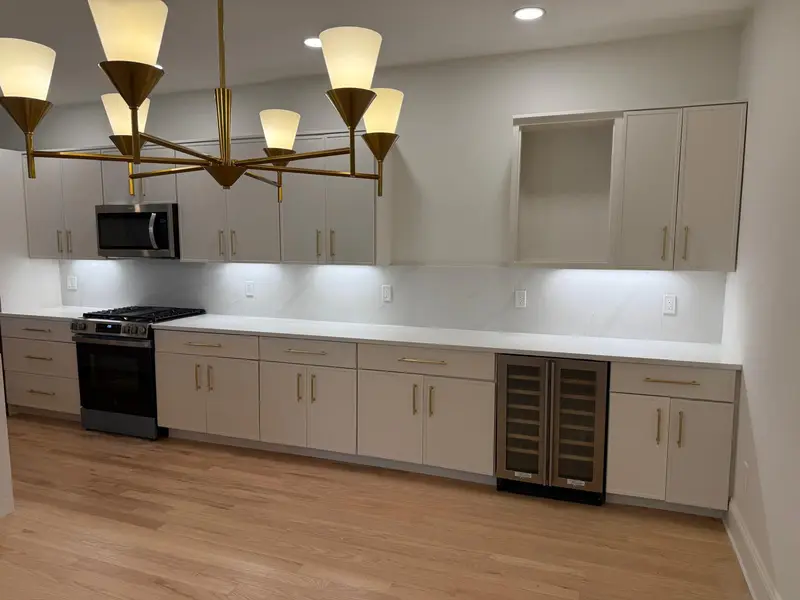
A Newton kitchen with a long run of cabinets and a peninsula. The doors came off, the boxes were painted in place, and the finished kitchen has white cabinets with brass pulls.
See the photos →Doors, drawer fronts and face frames degreased, sanded, primed and finished in hard-wearing enamel, so a kitchen with sound cabinet boxes can look new without a tear-out.
A kitchen in Stow could belong to a 1700s farmhouse, a 1970s colonial or a house finished in the last twenty years. The Census puts the town's median build year at 1974 (margin of error four years), and the same table shows roughly a quarter of the housing units, 709 of 2,820, dating from 2000 or later. Cabinets in those homes can be a century apart in construction, and that gap decides what a refinish can and cannot do.
Before anyone talks about color, the real question is whether the boxes are worth keeping. Square, solid cabinets with a layout you can live with are good candidates for paint. Boxes that sag, swell or no longer fit how you cook are usually better replaced, and our cabinet painting vs. replacement guide walks through that decision.
The material under the old finish sets the prep plan, so it is worth identifying before you commit.
About 60% of Stow's housing units, 1,683 of 2,820, were built in 1979 or earlier. Residential lead paint was banned in 1978, and the Census bracket closest to that date is 1979, so that figure slightly overstates the pre-ban group. Even so, it is a reminder that cabinet frames, trim around the cabinets and the walls behind them may carry old paint layers in many local kitchens.
In a house built before 1978, sanding painted surfaces falls under the EPA's Renovation, Repair and Painting rule. We work lead-safe, and the details are on our lead-safe painting page. If you are unsure how old your kitchen's finish is, mention it at the estimate.
Older kitchens also collect decades of cooking grease and hand oils around the stove and sink. Enamel will not stay on a film of that, so a thorough degreasing pass comes before any sanding.
The town's 2010 Master Plan describes its housing as including historic dwellings and farmhouses alongside typical New England single-family homes, and the state's 2006 heritage report counts nearly 200 inventoried historic resources. In a house with that kind of age, a kitchen that has been remodeled or extended more than once may have cabinets from different decades meeting at odd angles.
Painting is a good tool for unifying that mix. Doors from one era and boxes from another can share a single finish, and any gaps or out-of-square runs can be addressed with caulk and trim adjustments before the topcoat. What paint cannot fix is a floor that has settled or a counter that has pulled away from the wall; those are carpentry issues, and it is better to know about them before the finish goes on.
A durable cabinet finish is mostly preparation. Doors and drawer fronts come off and are labeled, hinges and pulls are removed, and every surface is degreased, scuff-sanded and spot-primed or fully primed with a bonding primer. Holes from old hardware are filled if you are changing pulls.
Topcoats go on in thin, sanded coats rather than one heavy pass, using a cabinet-grade enamel that cures hard. Curing takes longer than drying: the surface may feel dry in hours but stays soft for days, so gentle use early on protects the result.
Because a cabinet finish takes daily abuse around the stove and sink, choose it for wear rather than speed. Paint sheen, hardware swaps and whether to refinish the inside of the boxes are all worth settling at the estimate.
| Median year homes were built | 1974 (±4 years), town-wide (U.S. Census ACS 2020–2024 5-year, table B25035) |
| Housing units built in 1979 or earlier | 59.7% (1,683 of 2,820), town-wide (U.S. Census ACS 2020–2024 5-year, table B25034) |
| Housing units built in 2000 or later | 25.1% (709 of 2,820), town-wide (U.S. Census ACS 2020–2024 5-year, table B25034) |
| Inventoried historic resources | Nearly 200, late 1600s to early 1900s (as of 2006) (DCR / Freedom's Way Stow Reconnaissance Report, 2006) |
These jobs were in other towns, not in Stow. Each card names the town where the work was done.
A Newton kitchen with a long run of cabinets and a peninsula. The doors came off, the boxes were painted in place, and the finished kitchen has white cabinets with brass pulls.
See the photos →Paint works when the boxes are structurally sound, the doors are flat and the layout still suits you. If boxes are water-swollen, sagging or sized awkwardly for your appliances, replacement may be the better spend. A free on-site estimate lets us look at the construction before you decide.
It can. Sanding painted surfaces in pre-1978 housing falls under the EPA's lead-safe renovation rules, which call for containment and cleanup. We follow EPA RRP lead-safe practices; see the lead-safe painting page for what that involves.
Yes, unless a grain filler is applied first. Oak has open pores that telegraph through enamel. Some owners like the texture and some want a smooth finish, so it is a choice to make before the work begins.
Doors can be rehung once the enamel is hard enough to handle, but full cure takes longer than touch-dry. Treat the finish gently for the first couple of weeks, and ask at the estimate for the cure time of the specific product chosen.
Mixed-era cabinets are workable. Different door styles and box materials can share one finish, and small gaps can be caulked. Settled floors or walls out of plumb are carpentry matters that paint will not hide.
Pricing depends on the number of doors and drawers, the condition of the surfaces and the finish system. For Massachusetts market data, see our cabinet painting cost guide. After the free on-site estimate, you get a written quote within 48 hours of the visit.
Ask for a free on-site estimate. We reply within 24 hours and send a written quote within 48 hours of the visit.
5.0 on Google · 35 verified reviews · Licensed & insured · Written quote in 48h