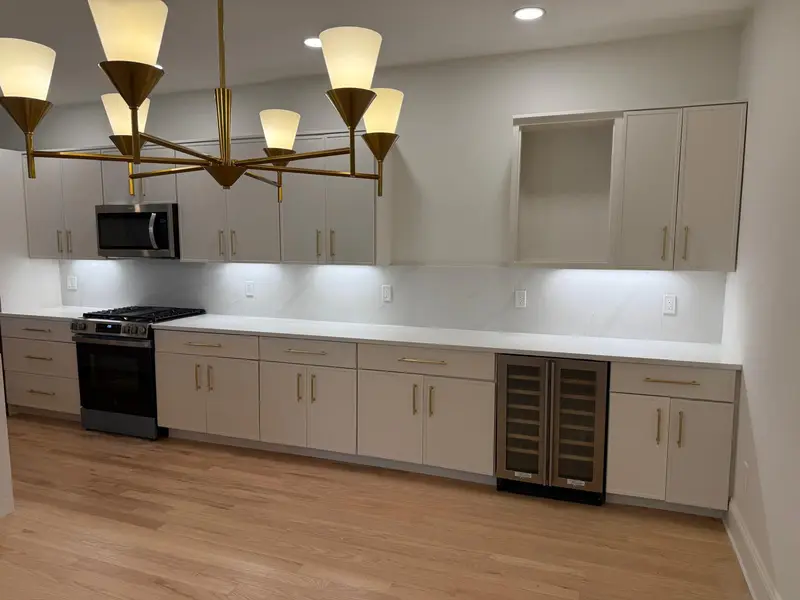
Cabinet painting, SouthbridgeRefinishing kitchen cabinets in houses that are older than the kitchens in them
A kitchen is rarely the same age as the house around it. In Southbridge, where the census puts the median home at 1956 and about 33% of homes predate 1940, a kitchen can easily sit inside walls much older than itself. The cabinets you have might be original painted wood, a 1970s oak set, or a builder-grade box from a later update, and each one calls for a different plan.
Below: how to size up what you have, when refinishing beats replacing, how the finish goes on, and what changes in two- and three-family buildings.
Reading what you have: wood, laminate and old finishes
Solid wood doors and face frames paint well once they are cleaned of kitchen grease, scuffed and primed with a bonding primer. Oak is a common challenge, since its open grain will show through a single coat unless a grain filler goes on first. Maple and birch are tighter and finish smoother. Laminate and thermofoil doors can be painted too, but they are riskier, because peeling thermofoil needs to be removed before anything holds.
Older cabinets also carry decades of layered paint. In a pre-1978 house, that paint can contain lead, and the town's housing plan flags lead paint as a health concern in older homes. Sanding is controlled and wet-cleaned, and our lead-safe page explains the approach. Cabinets from later decades are mostly a matter of degreasing and de-glossing.
Refinish or replace
Boxes that are solid and level with doors that are intact are good candidates for refinishing, since a new color changes the room without gutting it. Replacement makes more sense when the layout itself does not work, when boxes are water-damaged or sagging, or when particleboard has swollen near the sink. Our refinish vs. replace guide goes through that decision with a checklist.
One note on sequence: if the plan includes new counters, backsplash or floors, paint the cabinets before or after in a planned order so tile dust and sanding debris do not meet fresh finish.
How the finish goes on
Doors and drawer fronts come off, get numbered and are cleaned, sanded and primed, then finished with a hard-wearing cabinet enamel. Hinges and pulls are removed so they are not painted over. Boxes stay on the wall and are masked, with the room protected. Curing time matters: enamel feels dry within hours, yet it keeps hardening for days, so doors should be handled gently at first and not wiped with abrasive cleaners.
Flooring, counters and trim that are staying put should guide the color. The color combinations page is a starting point.
Apartments, rentals and two-family kitchens
Census data puts roughly 57% of occupied Southbridge homes in the renter column, and about 39% of units sit in two- to four-unit buildings. For an owner of a two- or three-family, refinishing the cabinets in one unit between tenants is a practical way to refresh a kitchen without a remodel. A unit with fewer doors and drawers is a smaller job, and the order of work can be planned around the kitchen staying usable.
For a condo or apartment owner, check your association's rules about work hours and elevator or hallway use before booking. The condo painting page covers that side.
Southbridge at a glance