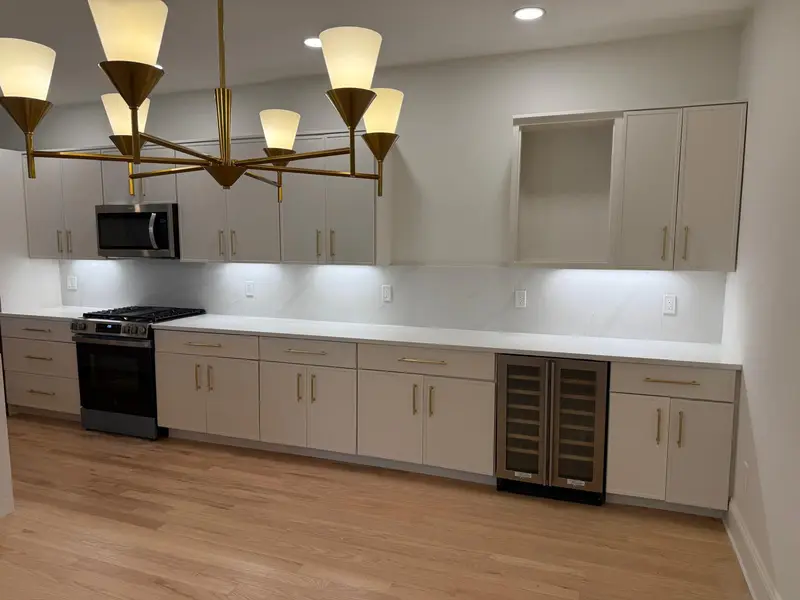
Cabinet painting, SalemPainting kitchen cabinets in Salem when the house is far older than the kitchen
When the median home in the city was built in 1938, the cabinets in a given kitchen may come from a later remodel and be decades younger than the plaster and window trim around them. That mix shapes the job. The cabinets themselves may be oak, maple, cherry or a laminate-faced box, and each takes paint differently.
Painting is a way to change the look of those cabinets without tearing out boxes that are still square and solid. If the frames are sound and the layout works, the change comes down to primer that bonds to the old finish, new color and new hardware. If the boxes are water-damaged or the layout is the real problem, paint won't fix it, and our comparison of refinishing versus replacing kitchen cabinets walks through that choice.
What the wood tells you
Red oak has open grain that shows through paint as a texture unless it is filled first; a smooth face needs grain filler, which adds a step. Maple and birch are tighter and take paint smoothly but can show blotchy primer if the old finish isn't fully scuffed. Thermofoil and laminate doors need a bonding primer made for slick surfaces, and peeling thermofoil is a sign the door should be replaced rather than painted.
Every surface gets the same core prep: a degreaser to cut cooking film, a scuff-sand, dust removal, and a primer chosen for the substrate. Our kitchen cabinet painting process shows each step in order.
Built-ins and pantries in older houses
Salem's housing count includes 10,951 units built in 1939 or earlier. In a house of that age, a butler's pantry, china cupboard or bathroom vanity built into the wall may still be in place and may already be painted, sometimes many times. With 76.4% of the city's units predating 1980, older coats on that woodwork can include lead paint, banned for homes in 1978. Sanding it calls for containment, HEPA dust collection and cleanup, as set out on our lead-safe painting page.
Kitchens in two- and three-family buildings
Census data places 38.0% of Salem's housing units in buildings with two to four units, and each of those units normally has its own kitchen. In a two-family, one way to keep the kitchen usable is to move the doors to a separate spray area while the face frames are finished in place under masking. That keeps a working household, or a tenant, cooking during the job. Indoor cabinet work also sits outside Historical Commission review, since the Commission's guidelines exclude interior work that does not affect the exterior.
- Doors and drawer fronts removed, labeled and finished in a controlled spray setup
- Face frames, end panels and toe kicks cleaned, primed and coated on site
- Hinge holes filled and redrilled if hardware is changing
- Interior shelves and boxes painted only when asked
Finishes that hold up at a kitchen sink
Cabinet doors are handled every day, so the topcoat matters more than on a wall. Waterborne alkyd and urethane-modified enamels level well and harden over a few weeks. The full cure is slower than the dry time, so doors go back on carefully and the first weeks call for gentle cleaning. Our post on painting versus replacing cabinets covers how long a painted finish lasts.
Salem at a glance