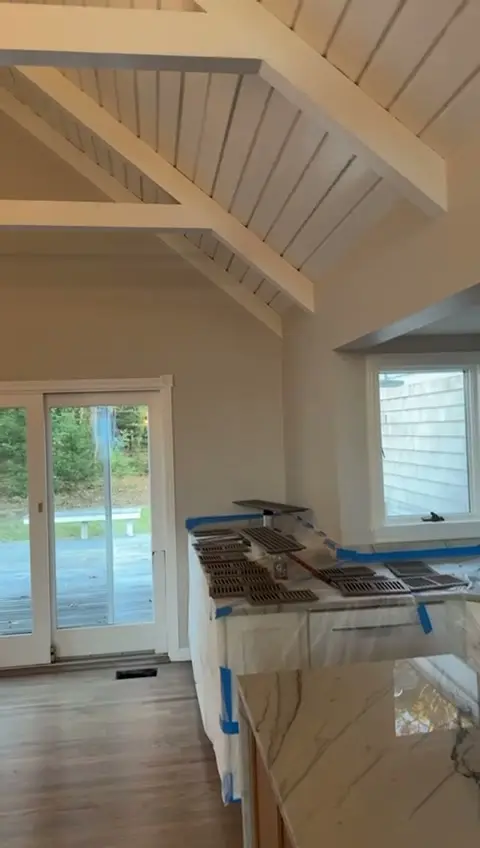
Interior painting, DorchesterInteriors where the median home dates to 1938
In ZIP codes 02122 and 02124, the Census puts the median year housing units were built at 1938. In 02125 it is 1941, and in 02121 it is 1944. Those are medians, so about half the homes in each ZIP were built in or before that year. Houses from before World War II predate the postwar spread of drywall, so unless walls have been replaced, the surface under the paint is often plaster on wood lath.
Sound plaster takes paint well. The work is in finding where it isn't: hairline cracks over doorways, bulges where the plaster keys have let go from the lath, and old patches that show through every coat. Those get cut out, secured or skim-coated before primer, so the finish coat isn't the first thing to crack.
Trim, doors and many decades of paint
Window casings, baseboards, doors and stair parts in an older house carry every coat ever applied. Built-up paint fills in profiles, makes doors stick, and can hide oil-based layers that new latex won't bond to without proper sanding and a bonding primer. The latex vs. oil-based paint comparison explains why that test matters.
Across the four main Dorchester ZIPs, 76.1% of housing units date from 1979 or earlier, so the trim in many of these homes predates the 1978 lead paint ban and may carry lead under later coats. Sanding it, or cutting into painted plaster, makes dust that has to be contained. Interior lead-safe work under the EPA RRP rule means sealing the work area with plastic, misting before scraping, HEPA vacuuming and a wipe-down check before the room is reopened. Details are on the lead-safe painting page.
- Plaster crack repair, re-securing loose plaster and skim coating
- Ceilings, including high ceilings in Victorian front rooms
- Trim, doors, stair rails and balusters with proper bonding primer
- Lead-safe containment and cleanup on pre-1978 surfaces
Working inside a multi-family building
In those same ZIP codes, 39.5% of homes are in three- and four-unit buildings and 16.1% in two-family houses; another 24.6% are in buildings of five or more units. So a home here is frequently one floor of a stacked building, where the front hall and stairwell may be shared with the other units.
That shapes the plan. Common halls are painted in stages so a path stays open. Wet-paint signs and drying times are posted for neighbors. Dust control matters beyond the unit being painted, since a shared stair carries it to every door. In a condominium, the hall and stairwell are generally common area, which means the association, not one owner, decides on that part of the work.
Rented units and turnovers
Owner-occupied homes make up 36.7% of occupied units across these ZIPs, so nearly two in three occupied homes here are rented. For a landlord, an empty unit is the easiest time to paint: no furniture to move, no one living around the containment. Fresh paint is not the same as deleading, though; the City of Boston's Lead Safe Boston program offers free lead inspections and forgivable loans for eligible owners of one- to four-family homes.
Dorchester at a glance