

Mashpee, MA (Cape Cod)
Whole-Home Interior in Mashpee, MA
A home in Mashpee on Cape Cod with light gray walls, white trim and doors, and a vaulted plank ceiling with exposed beams finished in white.
See the video →Walls, ceilings, trim and doors repainted with the prep an older Boston interior needs, from plaster repair to lead-safe work on painted woodwork.
In ZIP code 02135, the Census puts the median year a housing unit was built at 1956, and 38.8% of units date from 1939 or earlier. That spread matters indoors. A room in a pre-war house may have original plaster, layers of old enamel on the window casings and a ceiling that has been painted many times over, while an apartment in a building finished after 2010 (11.9% of local units) is likely to have drywall and factory-primed trim. The prep for those two rooms is not the same job.
The sections below cover wall and ceiling repair, the lead rules that apply to older trim and doors, and how unit type affects scheduling.
Plaster on wood or metal lath was the standard interior wall finish before drywall took over, so a pre-1940 interior may still have it. Plaster is hard and durable, but it cracks along ceiling joints and around door frames as a house moves, and loose plaster has to be secured before it is skimmed and primed. Painting over a crack without that step tends to let it reappear.
Ceilings deserve a separate look. Calcimine, an old water-based ceiling coating, can flake off in sheets when a modern latex goes over it; scraping a test patch tells you whether a ceiling needs a special sealing primer first. On drywall from later decades the common problems are smaller: nail pops, taped seams that show through flat paint, and gloss differences where earlier touch-ups were done.
In the 02135 ZIP code, 74.1% of housing units were built in 1979 or earlier. The Census groups construction years by decade, so the exact pre-1978 share isn't published, but the figure shows how much of the local stock could carry lead paint under later coats. Friction surfaces such as window sashes, door edges and stair treads are where old paint wears into dust.
Under the federal EPA renovation rule, interior work in pre-1978 housing that disturbs more than six square feet of paint in a room must follow lead-safe practices. Scraping and sanding a full set of window casings can pass that line quickly. Our lead-safe painting page explains containment, cleanup and verification.
If abatement is needed rather than just safe repainting, the City of Boston's Lead Safe Boston program offers owners forgivable loans of up to $12,000 per unit, and a Letter of Compliance from a licensed lead inspector qualifies for a $3,000 Massachusetts tax credit. Income limits apply to owner-occupants of one- to four-family homes with a young child, so check the program page for eligibility.
Only 9.2% of housing units in 02135 are detached single-family homes. Most local units sit in two-to-four-unit buildings (29.3%) or in buildings of five or more units (56.8%). For interior work, that means the job may be one condo or one floor of a two-family rather than a whole house. Before painters arrive, it helps to know your building's rules on work hours, elevator reservations, parking for a work vehicle and where materials can be staged.
Hallways and stairwells shared with other units are typically the association's responsibility rather than any one owner's. If your project touches them, get the board's approval in writing first.
Ceilings go first, then walls, then trim and doors, so drips land on surfaces that haven't been finished yet. Furniture moves to the center and gets covered, floors get drop cloths taped at the edges, and switch plates come off. When older trim is involved and lead-safe work is required, the room is sealed with plastic and the cleanup is checked before you move back in. For a checklist of what to handle yourself, see how to prepare your home for interior painting.
| Housing units built 1939 or earlier (ZIP 02135) | 38.8% of housing units (U.S. Census ACS 2020–2024 5-year, table B25034) |
| Housing units built 1979 or earlier (ZIP 02135) | 74.1% of housing units (U.S. Census ACS 2020–2024 5-year, table B25034) |
| Median year housing was built (ZIP 02135) | 1956 (U.S. Census ACS 2020–2024 5-year, table B25035) |
| Units in buildings of 5 or more units (ZIP 02135) | 56.8% of housing units (U.S. Census ACS 2020–2024 5-year, table B25024) |
| Interior lead-safe threshold, pre-1978 housing | More than 6 sq ft of paint disturbed per room (U.S. EPA, Renovation, Repair and Painting Program) |
These jobs were in other towns, not in Brighton. Each card names the town where the work was done.
A home in Mashpee on Cape Cod with light gray walls, white trim and doors, and a vaulted plank ceiling with exposed beams finished in white.
See the video →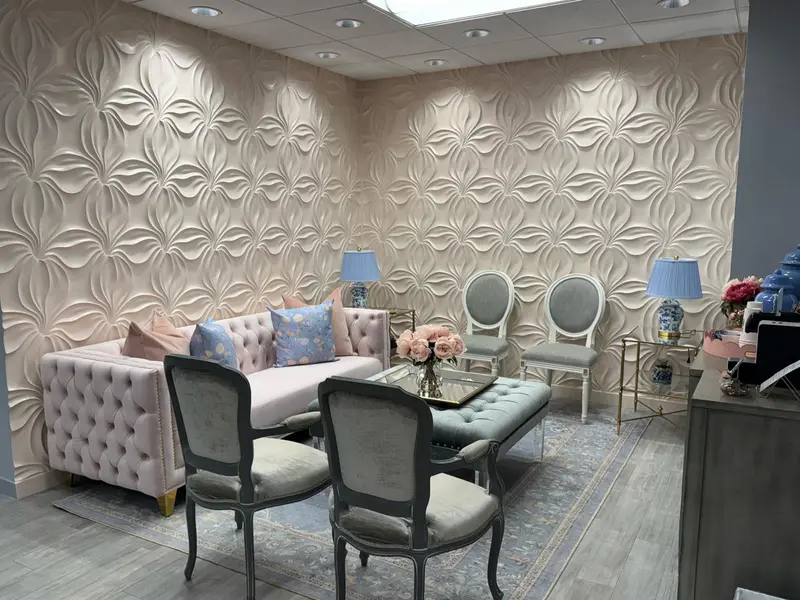
A dental practice's waiting room and reception area, finished in soft gray with applied panel molding, next to a sculpted floral feature wall.
See the photos →Fine hairline cracks can be filled and primed as part of normal prep, but cracks that reopen or plaster that moves when pressed needs to be re-secured to the lath first. Paint alone won't hold a crack closed, so the repair work is what decides how long the new finish looks right.
No. The city's Aberdeen page describes review of exterior work visible from a public way. Interior colors and finishes are not part of that review, though your condo association may have its own rules for shared spaces.
Age is the first clue: lead paint was banned for residential use in 1978, and 74.1% of units in 02135 were built in 1979 or earlier. The only way to know is testing by a licensed inspector or an EPA-recognized test kit. If testing isn't done, painted surfaces in a pre-1978 home should be treated as if lead is present.
Ask the management company about allowed work hours, whether the elevator must be reserved and padded, where a work vehicle can park, and whether contractors need to submit a certificate of insurance before starting. Getting those answers early keeps the job from stalling on day one.
It depends on wall condition, ceiling height, trim detail and whether lead-safe prep is required, which is why we give a written estimate after seeing the rooms. For a sense of the range, our interior painting cost guide summarizes Massachusetts market data.
Yes. Rooms can be done in stages so you keep part of the home usable each day. Where lead-safe work is required, the work area is closed off until cleanup is verified, and children and pets should stay out of it.
Free on-site visit to look at walls, ceilings and trim. Mon–Sat 7AM–6PM, (508) 258-4325.
5.0 on Google · 35 verified reviews · Licensed & insured · Written quote in 48h