
Location not listed
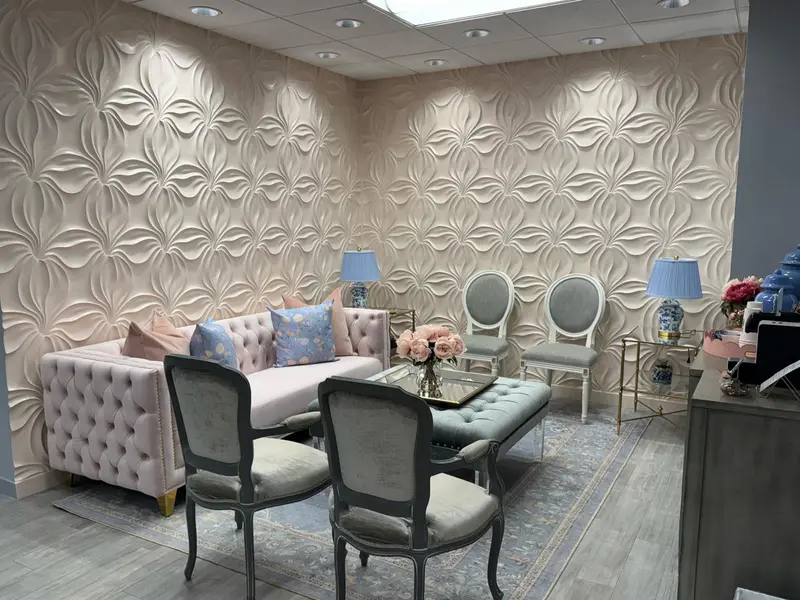
Dental Office Waiting Room
A dental practice's waiting room and reception area, finished in soft gray with applied panel molding, next to a sculpted floral feature wall.
See the photos →Individual condo units painted for their owners, and shared hallways, stairwells and building exteriors painted for associations, with the insurance and scheduling details boards ask for.
Multi-unit housing is a real share of the town's stock. Census estimates count 16.3% of housing units in buildings with five or more units, and most of that group, 12.7% of all units, sits in buildings of twenty or more. Another 4.1% are in two- to four-unit buildings and 5.8% are attached single-family homes such as townhouses. The census does not say which of these are condominiums and which are rentals; a building's recorded master deed is what makes it a condo.
Renters occupy 20.6% of occupied homes in town. When a condo unit is one of those rentals, the person living in it is not the one who hires the painter. Access, notice and who signs the estimate get worked out at the start.
Massachusetts condominiums are governed by Chapter 183A. Section 8 requires the master deed to describe the common areas and facilities and each unit's proportionate interest in them. That interest is the usual starting point for dividing shared costs such as a building repaint, though a master deed can set out a different allocation method, so read yours before the board votes. Interior walls inside a unit are commonly the owner's to paint, while corridors, lobbies, siding and trim are commonly common areas. Entry doors, balconies and decks vary from one master deed to the next, so check yours before ordering work on them.
Bylaws and rules can add their own requirements even for work inside a unit: advance notice to the manager, proof of the contractor's insurance, set work hours, or elevator padding and reservations in larger buildings.
A unit repaint follows the same steps as any interior job, with tighter logistics. Parking and loading may be limited, materials go up a shared stair or elevator, and odor carries into hallways, so low-VOC waterborne paints make sense. In a building that predates 1978, the EPA lead-safe rule applies once more than 6 square feet of paint per room is disturbed; the same rule covers common areas of pre-1978 housing. The interior painting page covers wall, ceiling and trim prep in more detail.
Common-area work is done around residents who need every exit open. The workable approach splits a corridor or stair tower into sections, keeps one path clear at all times, posts dated notices ahead of each section, and leaves floors and railings clean at the end of every day.
Hallway walls take abuse from furniture moves, bikes and strollers. A scrubbable eggshell or satin on walls and semi-gloss on doors, frames and handrails can be washed between repaints; flat paint marks easily in a hallway.
Where the master deed makes siding and trim common areas, repainting them is an association expense. If the complex sits inside one of the four local historic districts, design or material changes go to the Historic Districts Commission; paint color on residential buildings is excluded under the posted by-law, but confirming non-applicability with the Commission first costs nothing.
| Units in buildings with 5 or more units | 16.3% (2,554), including 12.7% in buildings of 20+ units (U.S. Census ACS 2020–2024 5-year, table B25024) |
| Units in 2- to 4-unit buildings | 4.1% (635) (U.S. Census ACS 2020–2024 5-year, table B25024) |
| Attached single-family homes (townhouse-style) | 5.8% (905) (U.S. Census ACS 2020–2024 5-year, table B25024) |
| Renter-occupied homes | 20.6% of occupied units (3,200 of 15,502) (U.S. Census ACS 2020–2024 5-year, table B25003) |
| Master deed contents | Must describe common areas and each unit's proportionate interest (M.G.L. c. 183A, Section 8) |
These jobs were in other towns, not in Billerica. Each card names the town where the work was done.
A dental practice's waiting room and reception area, finished in soft gray with applied panel molding, next to a sculpted floral feature wall.
See the photos →Interior walls in your unit are usually yours to paint, but read the rules: they may require notice, the painter's certificate of insurance, and work kept to set hours. The hallway side of your entry door is a different question: some master deeds treat it as a common element, so check before changing its color.
Yes, and the gap between tenants is the easiest time, since rooms are empty. If the building predates 1978, lead-safe practices apply to the work, and the association may still want notice and proof of insurance.
Your master deed sets each unit's percentage interest in the common areas, and that percentage is generally how common expenses are divided unless the deed specifies another method. A single written estimate addressed to the association, broken down by elevation and porch, makes the vote and the split straightforward.
Yes. Stairwells and corridors are done in sections with one route kept open, and fast-drying low-odor coatings can let a section reopen the same day.
Typically a certificate of insurance naming the association and the management company as certificate holders, delivered before work begins. AJ Painting is licensed and insured; ask for the certificate along with the estimate.
Start with the Massachusetts painting cost guide for market ranges, then get a written estimate for your buildings. AJ Painting's on-site visit and estimate are free. Asking for the scope to be priced by building or elevation makes it easier to spread the work over more than one budget year.
Call AJ Painting at (508) 258-4325 (Mon–Sat 7AM–6PM) to book a free visit and a written estimate for your unit or association. Licensed and insured.
5.0 on Google · 35 verified reviews · Licensed & insured · Written quote in 48h